Une autre lumière
Une autre lumière is a multi-layered drawing project developed during an artistic residency in Saint-Rémy-de-Provence.
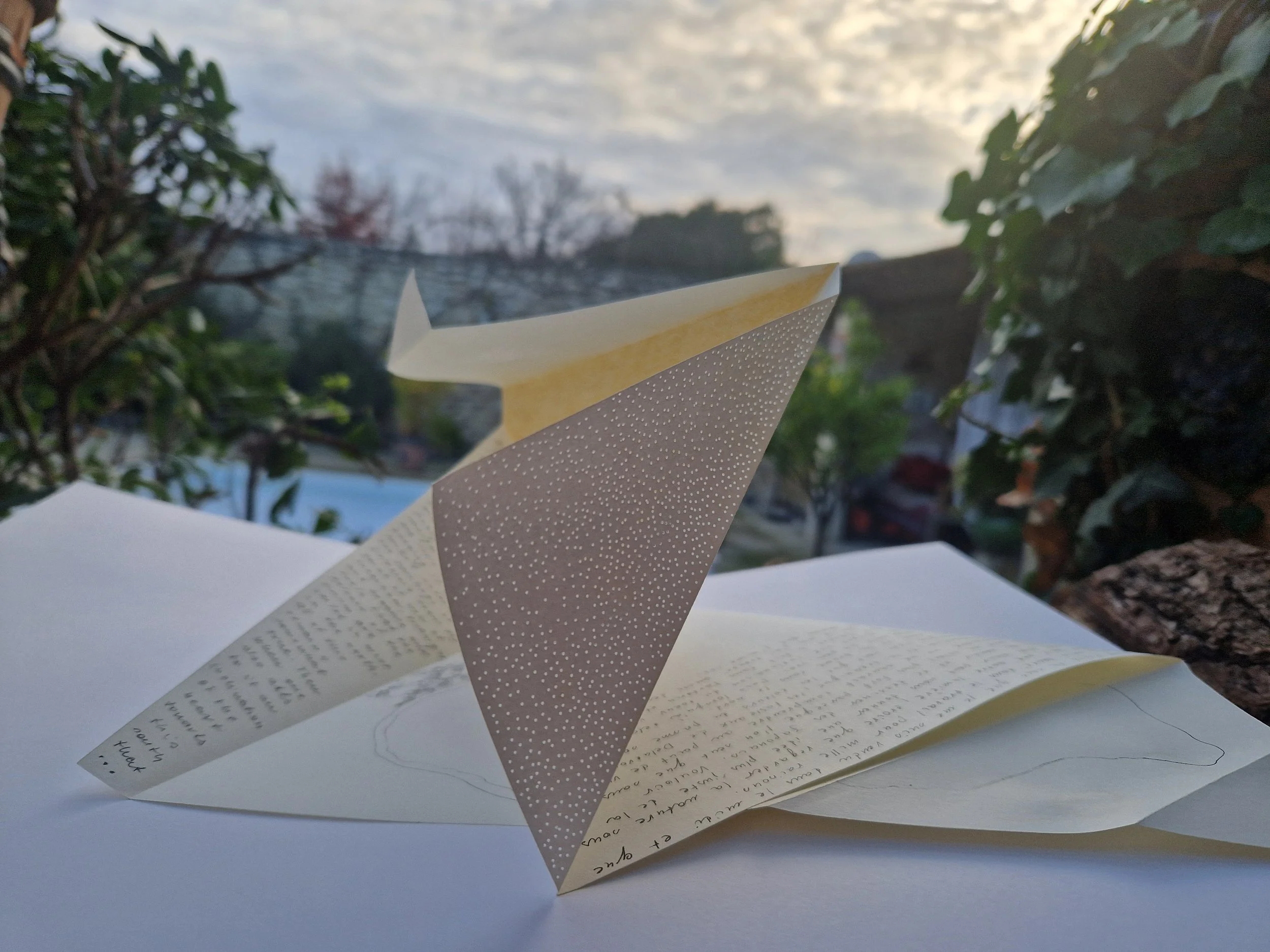
The project unfolds through folded paper objects, diary fragments, drawing studies, and large-scale works that gradually assemble a fragmented field of perception.
Une autre lumière approaches reality as fragmented and subjective. Memory, personal perception, and internal ordering shape the image of the world that can be assembled from available fragments. This process becomes a metaphor for identity — not as a fixed whole, but as a continually shifting construction.
The project unfolds through drawing as a layered field in which visual, textual, and mnemonic fragments coexist without hierarchy. Meaning does not arise from a single image or narrative, but from the simultaneous presence of multiple registers—line, surface, interruption, residue.
Across objects, studies, and large-scale works, fragments accumulate, overlap, and partially obscure one another. What is separated in space in the folded paper objects is later compressed into a single pictorial plane, where layers appear and disappear, interrupting any stable reading. Perception remains provisional, dependent on proximity, movement, and duration.
Drawing functions here as a record of layers that accumulate and remain present. Lines carry traces of density, rhythm, and time.
The project remains open. Individual works exist as parallel records within a single structure.
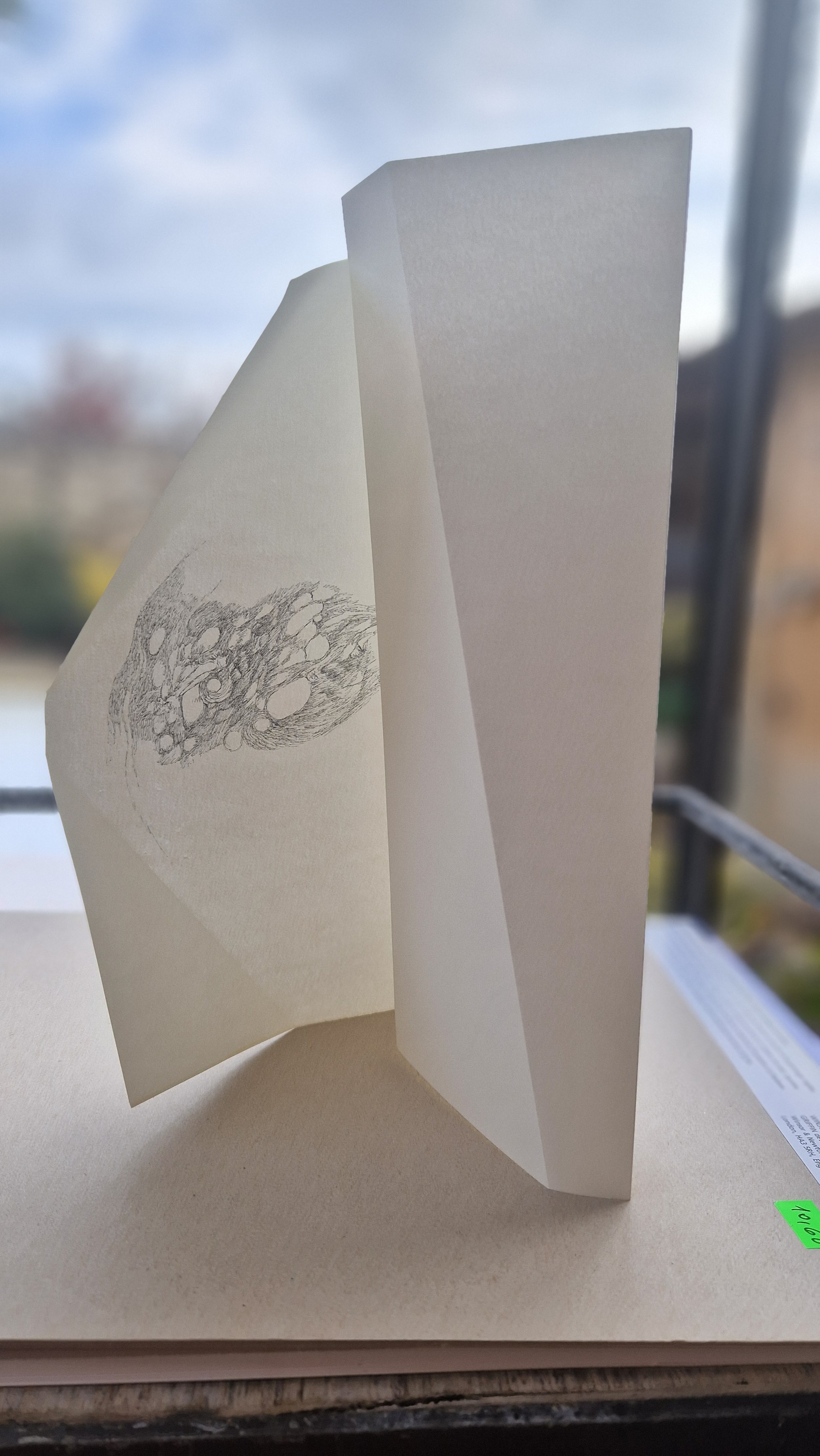
I. Objets pliés
The folded paper objects work with drawing, colour, perforation, and fragments of text as equal elements. Text excerpts from letters written by Vincent van Gogh to his brother Theo enter the works not as continuous reading, but as dispersed traces of place, light, and time.
The objects cannot be perceived at once. They reveal themselves gradually, from different angles, depending on movement and attention. Individual fragments do not close into a whole but remain in tension — between image and text, surface and space, the visible and the concealed.



II. Strates
These large-scale works bring multiple layers together into a single plane.
Drawing, colour, perforation, text, and redrawings from travel notes are superimposed, compressed, and partially erased.
What is separated in the folded paper objects here coexists on one surface. Layers appear and disappear, overlap, and interrupt one another. No single layer dominates; meaning remains unstable and non-hierarchical.
Rather than presenting a complete image, the works operate as condensed fields of perception. Different realities share the same space — not to be resolved, but to persist in memory.
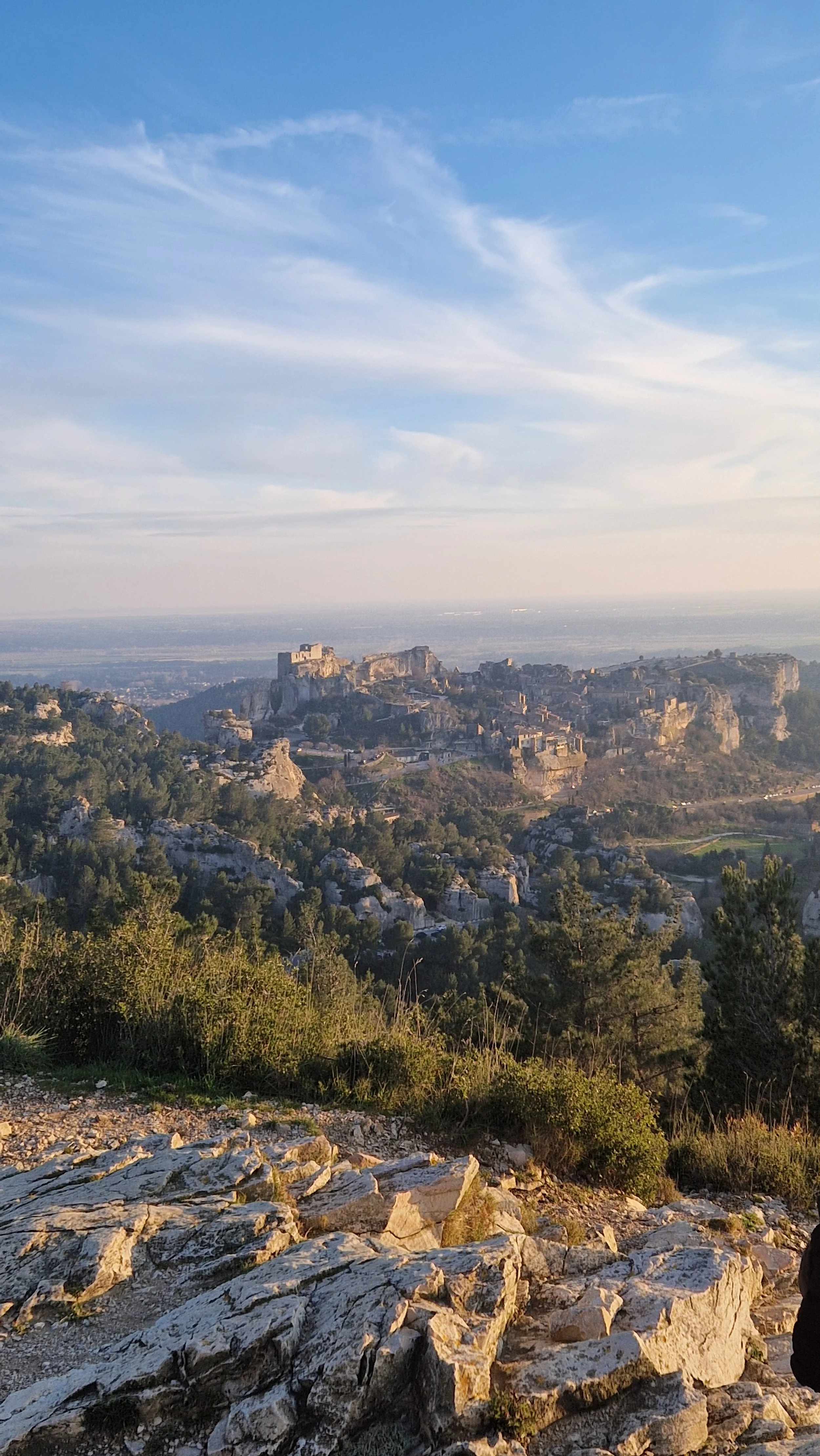
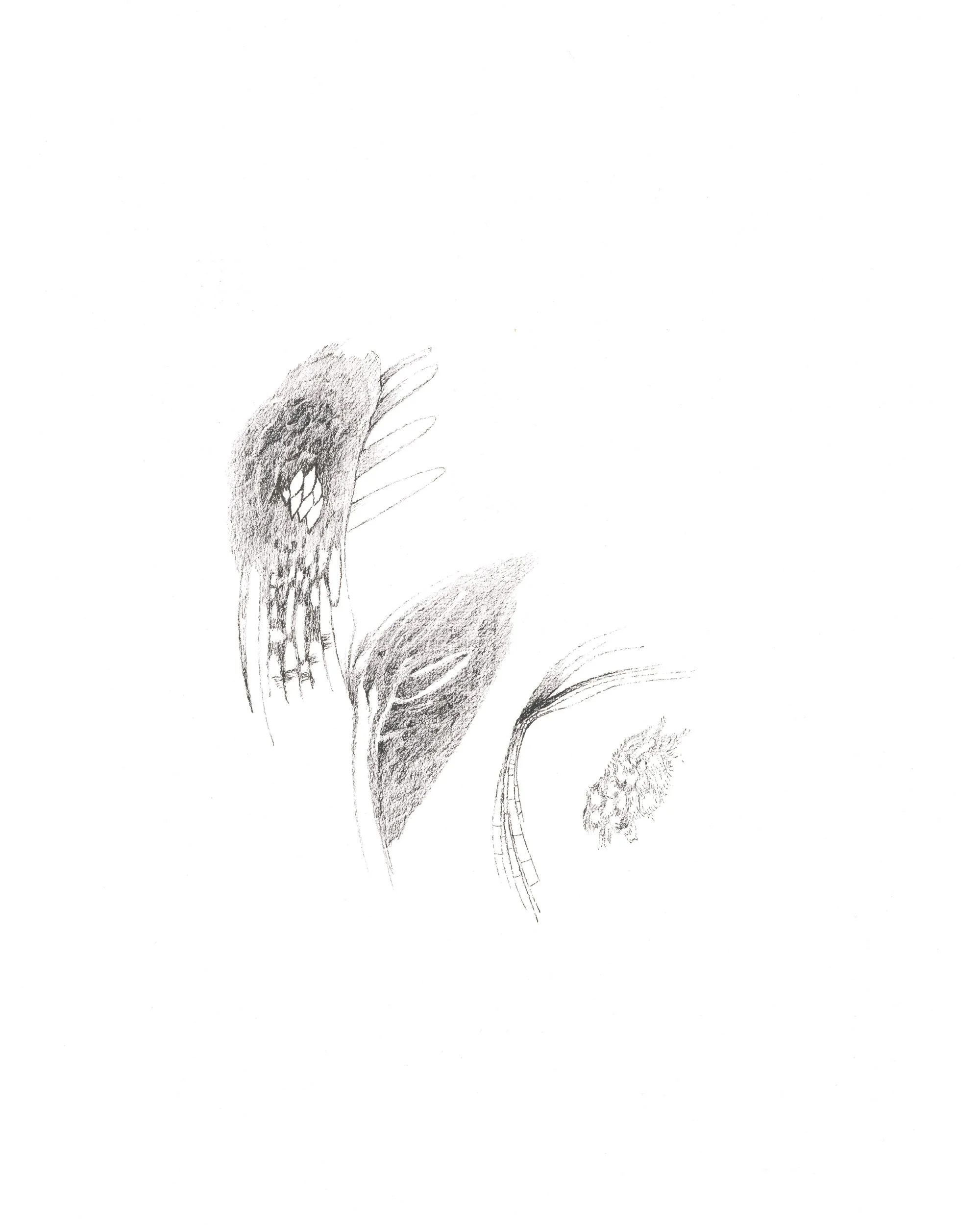
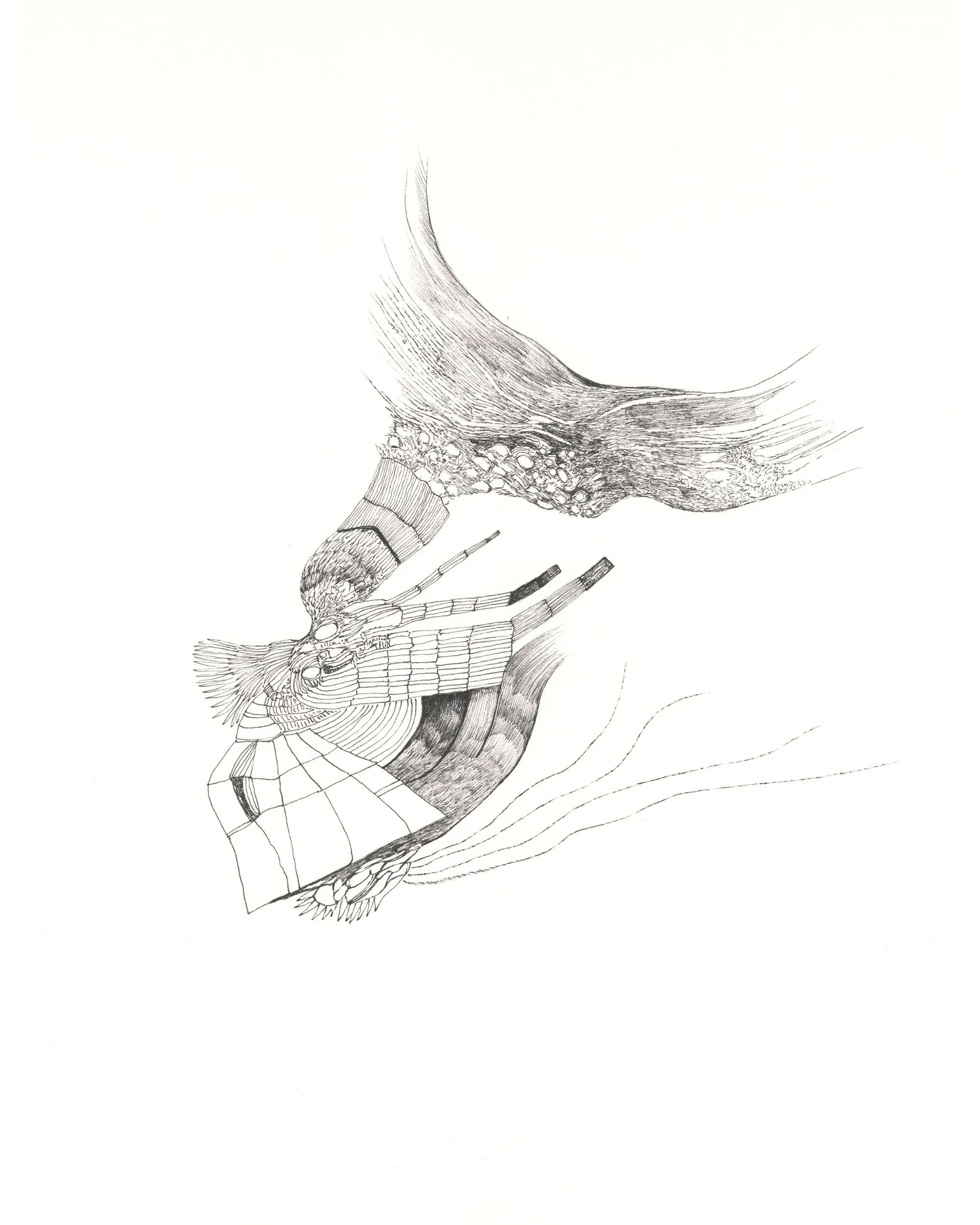
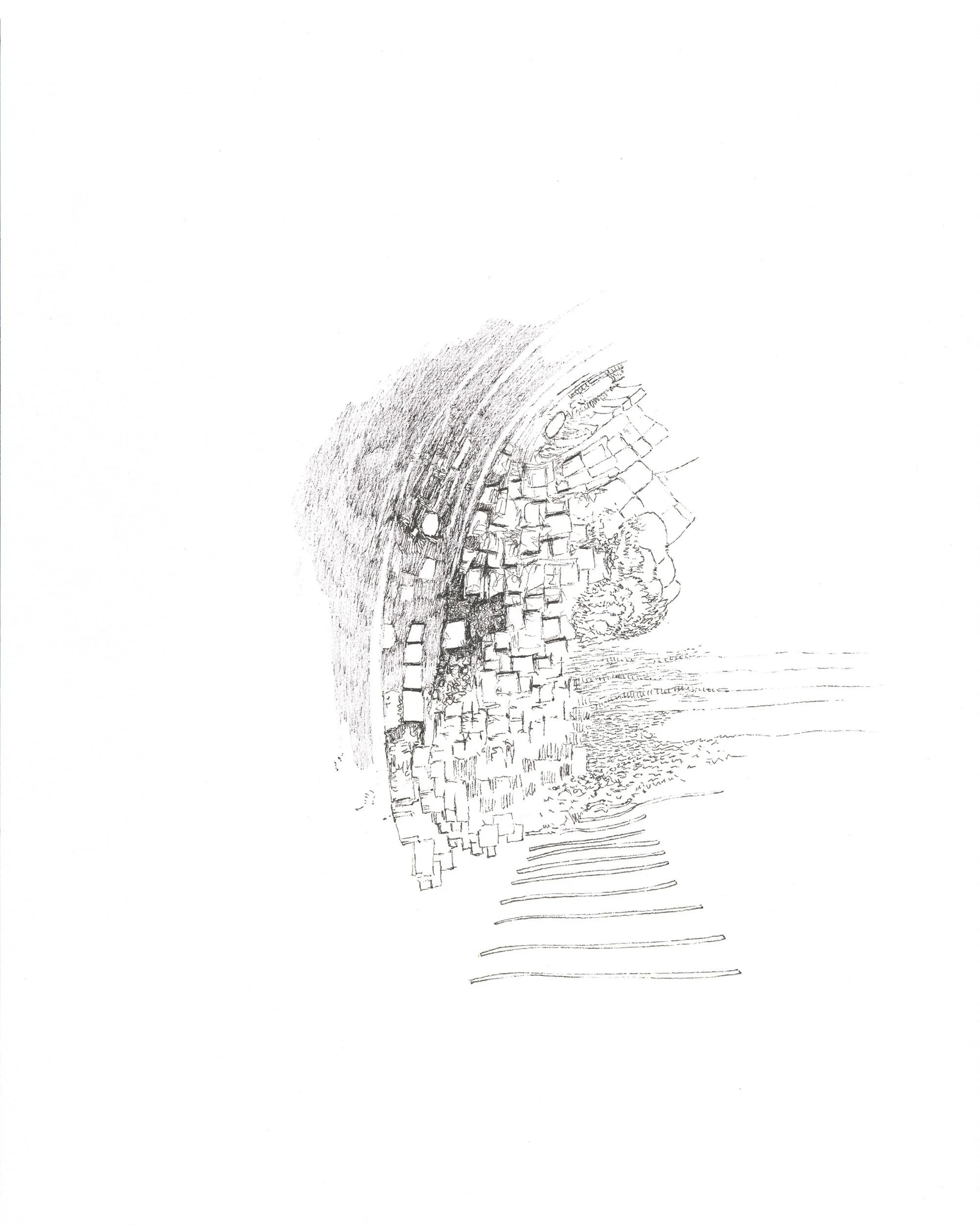
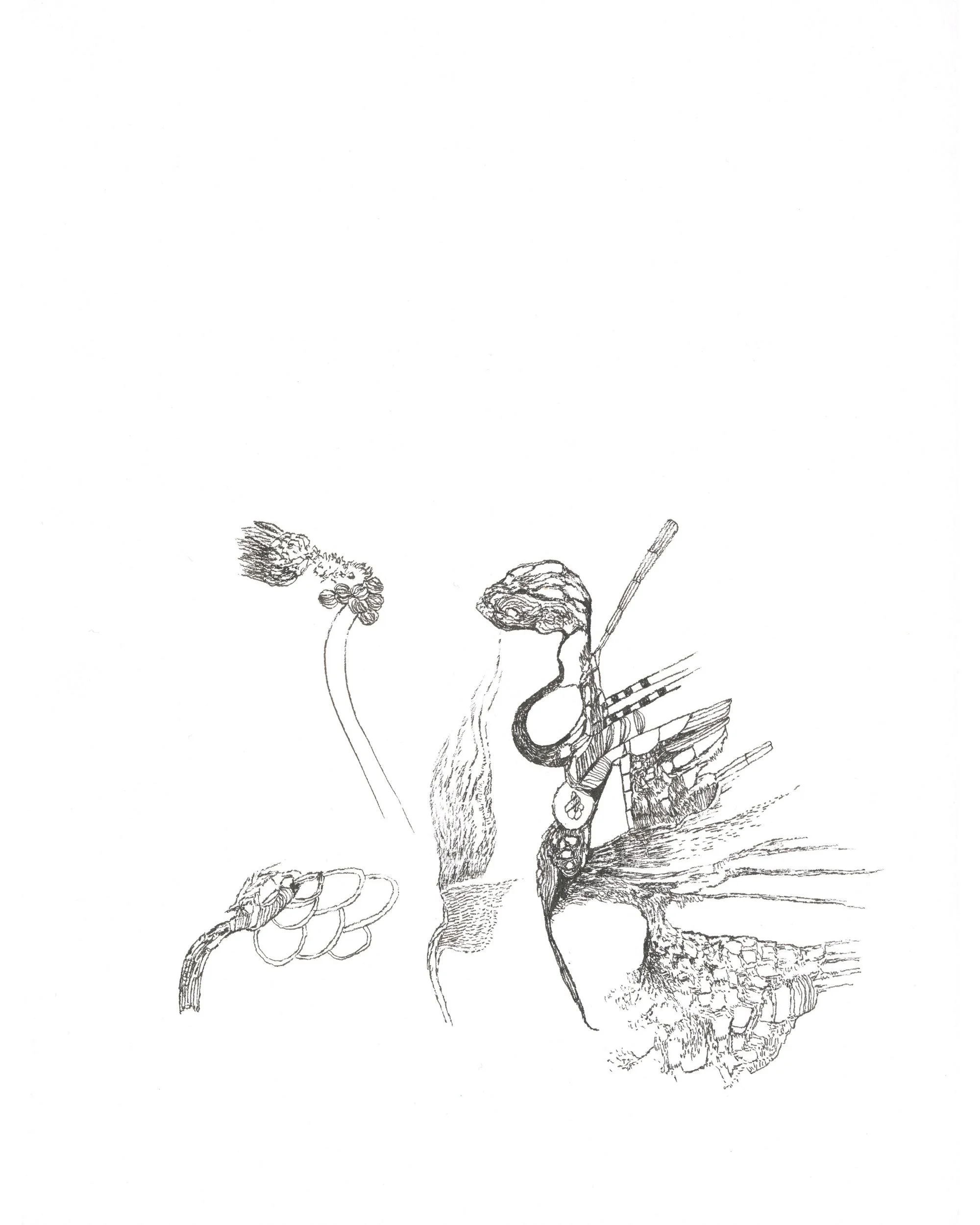
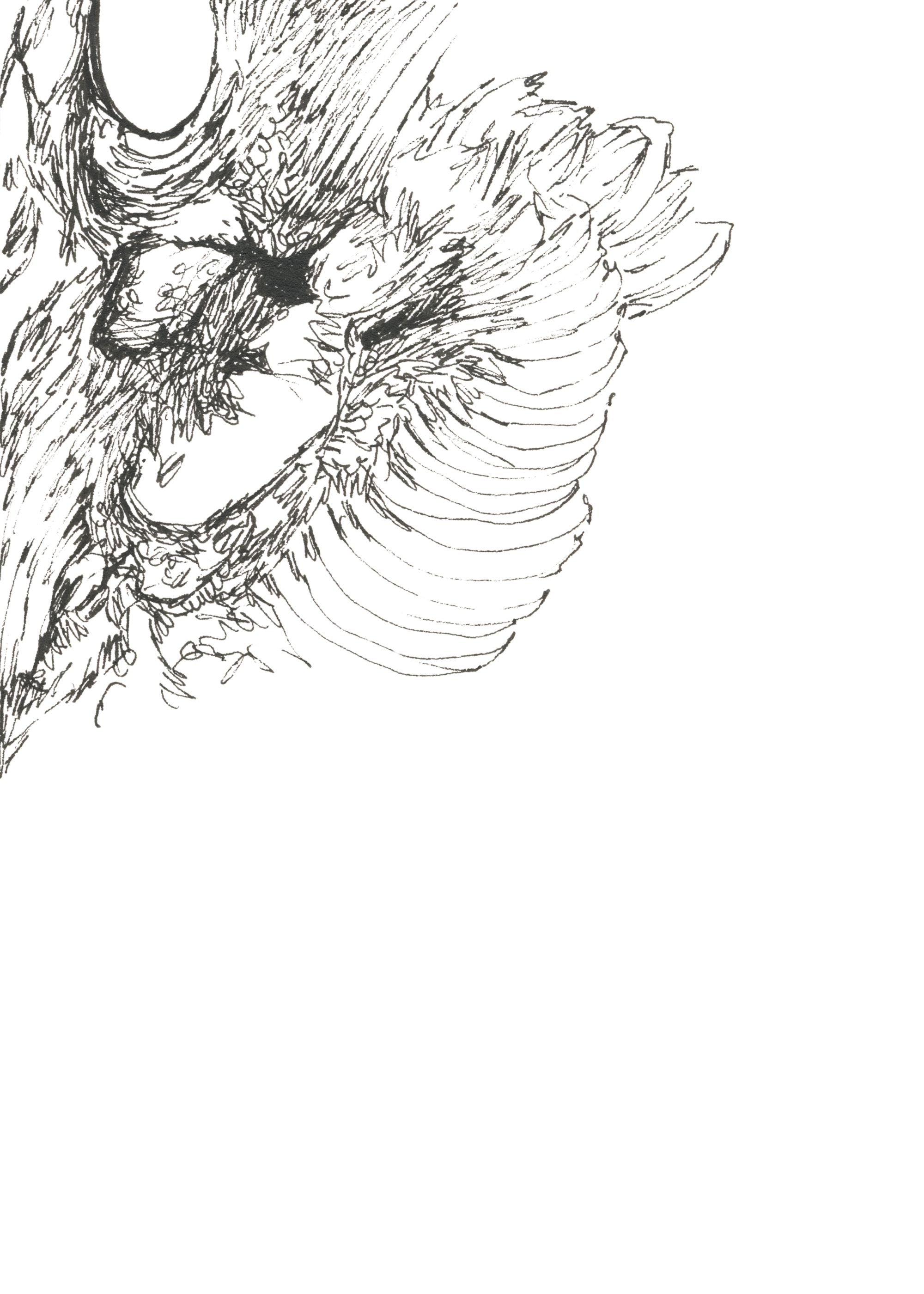
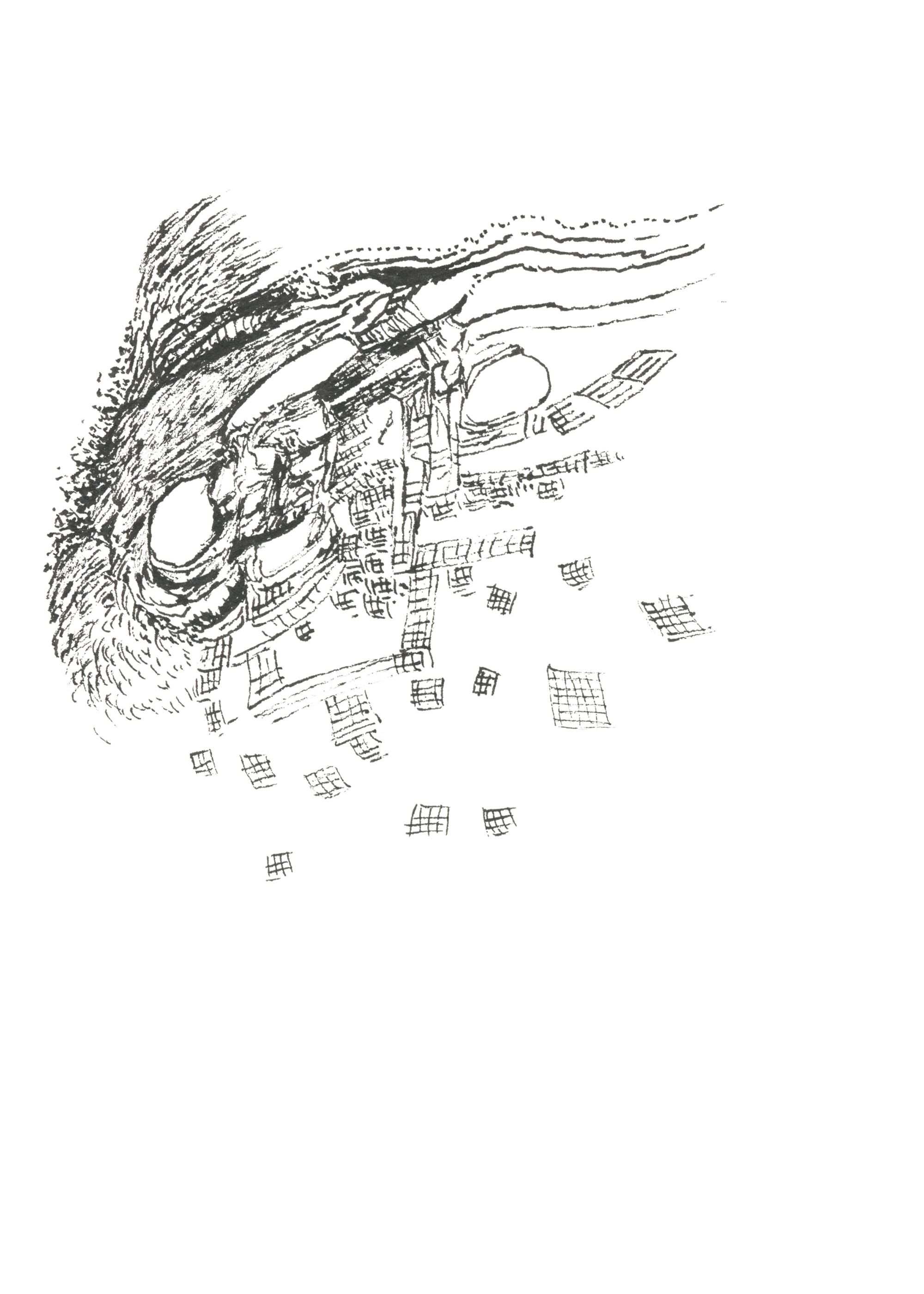
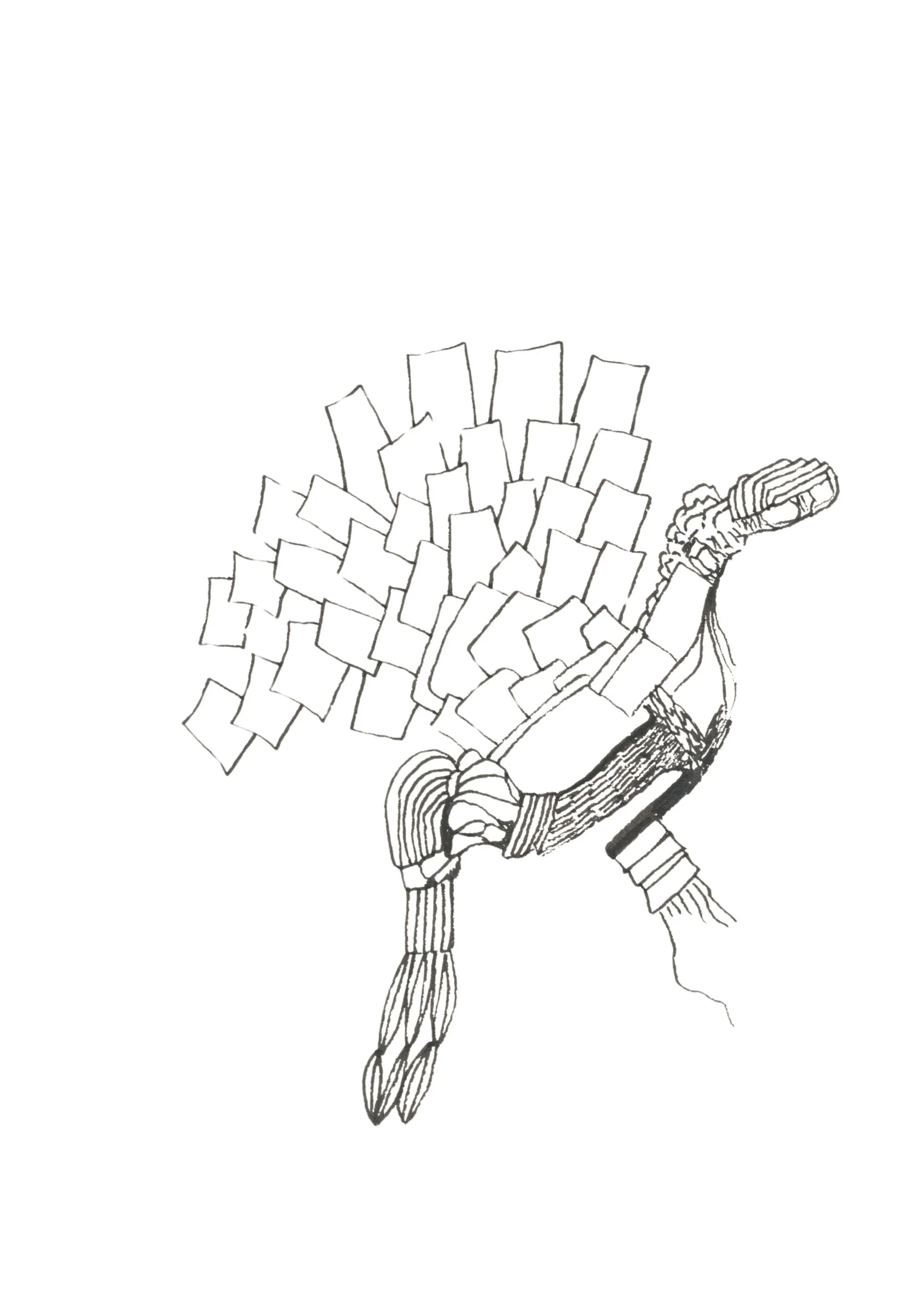
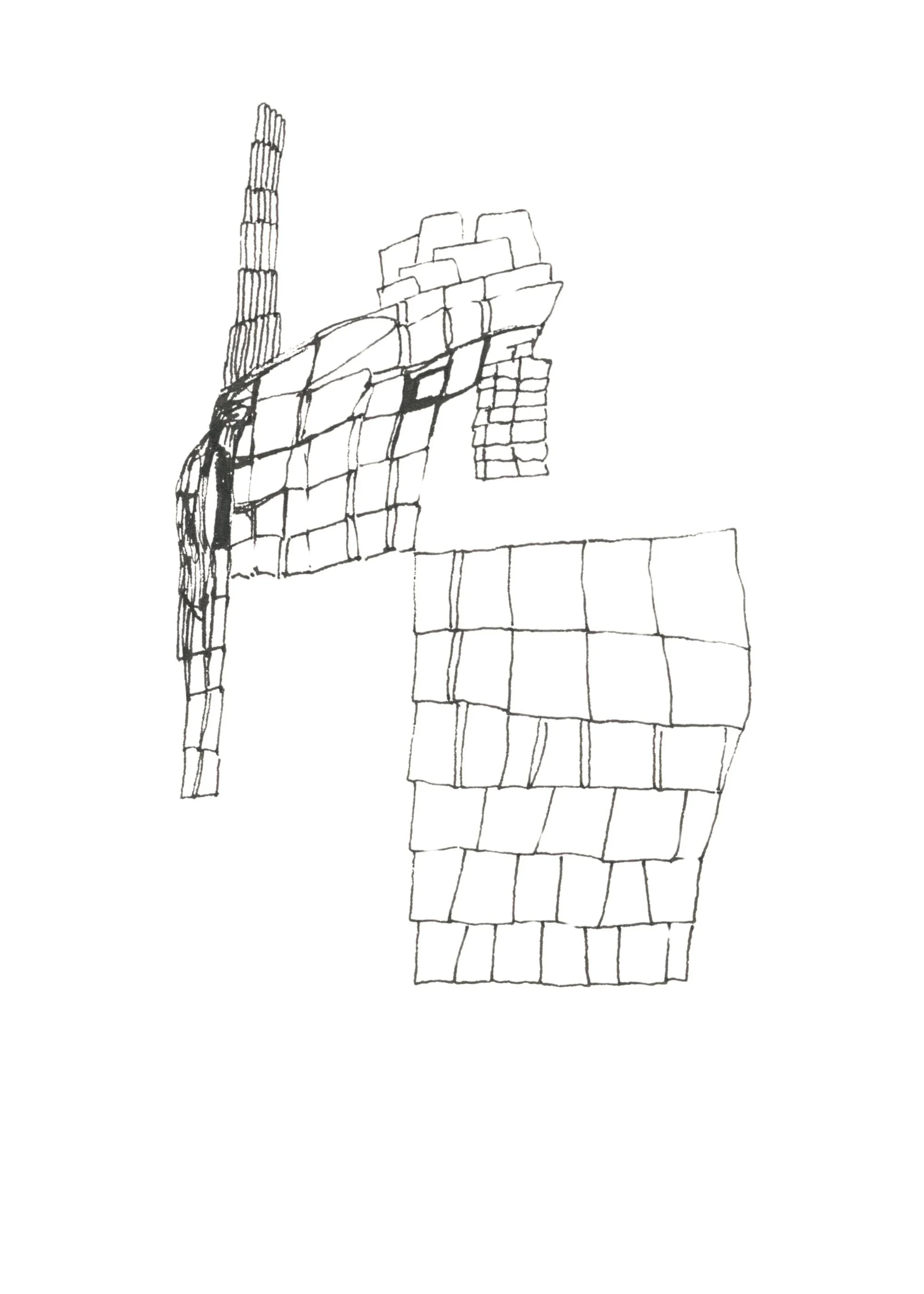
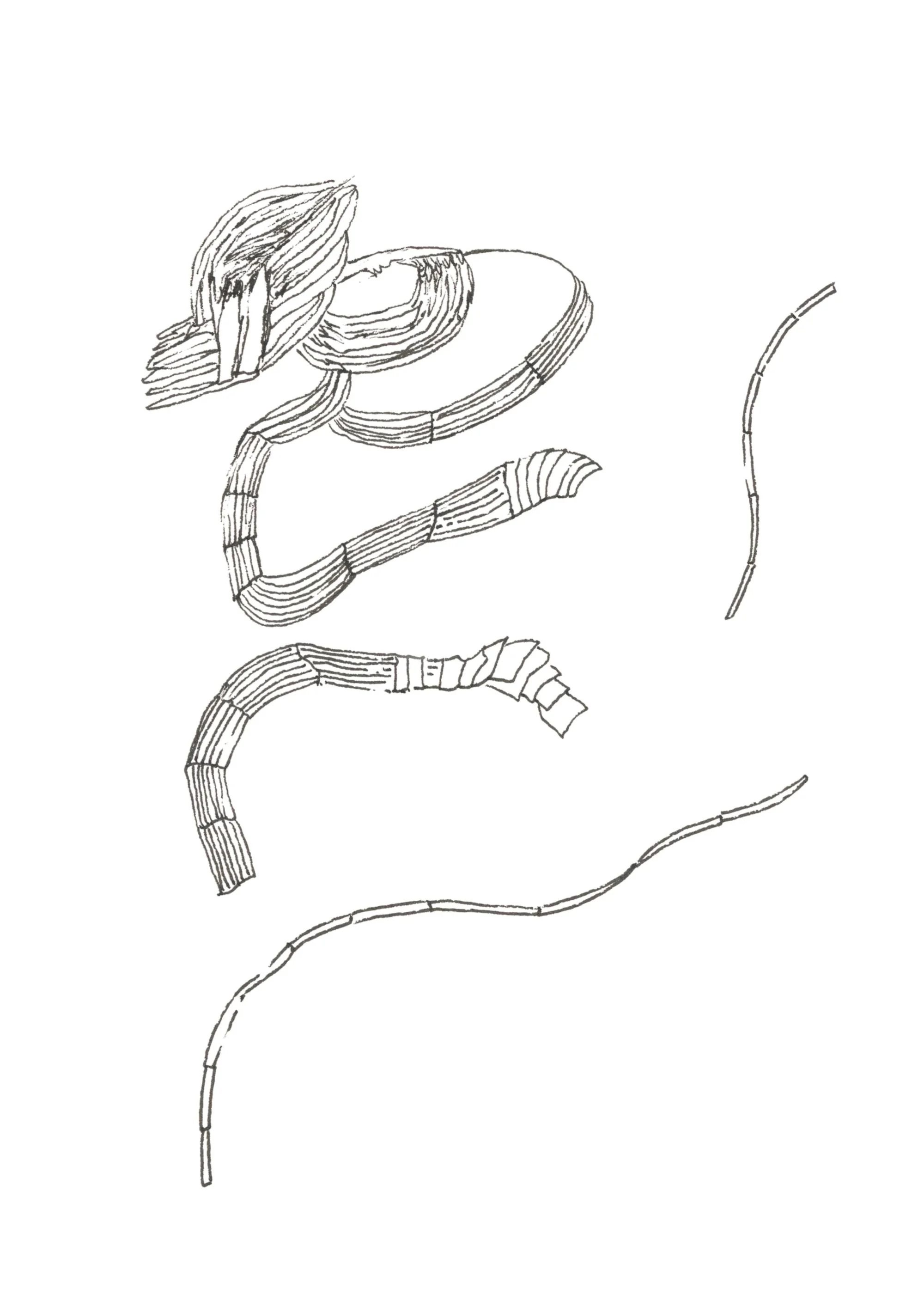
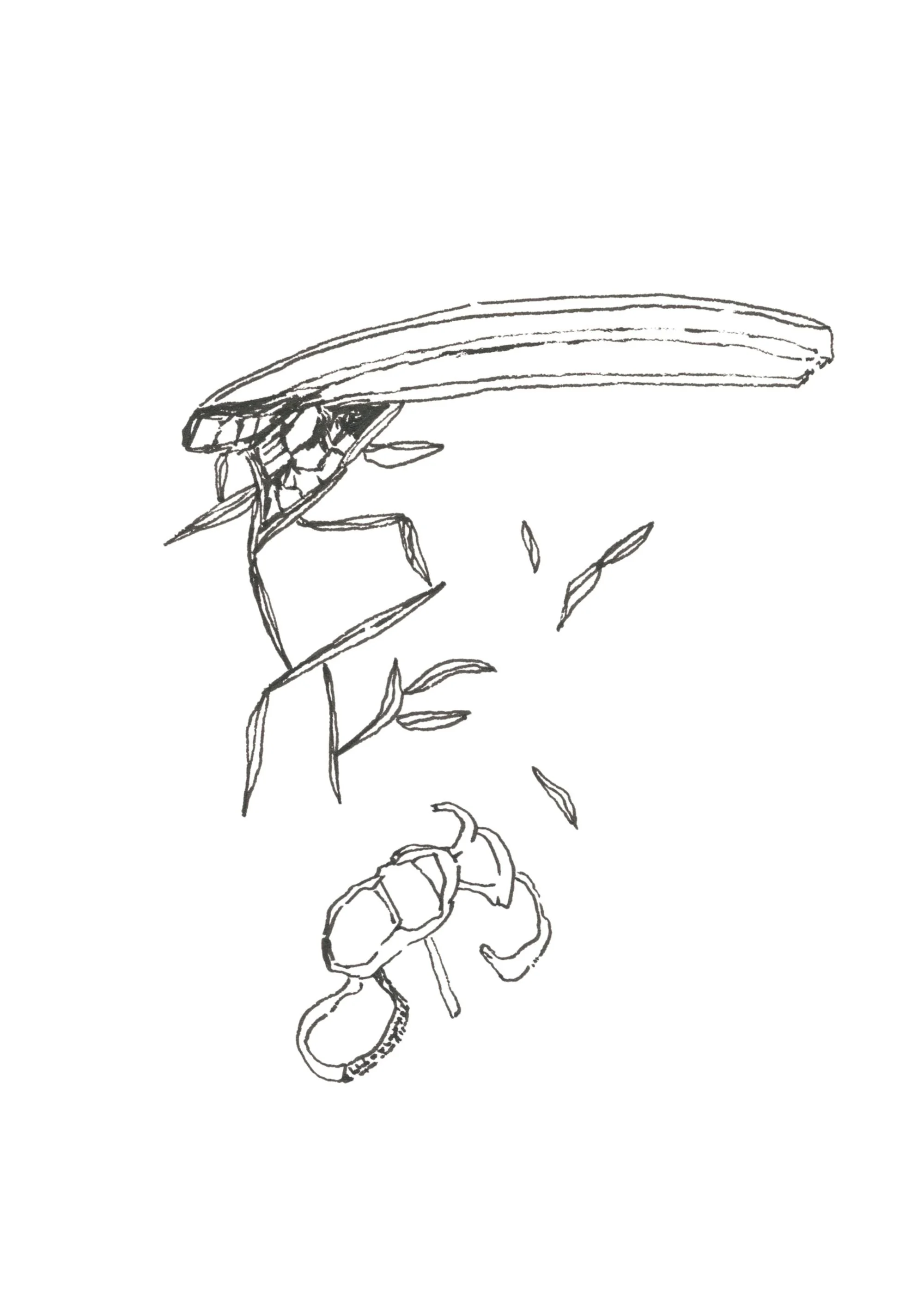
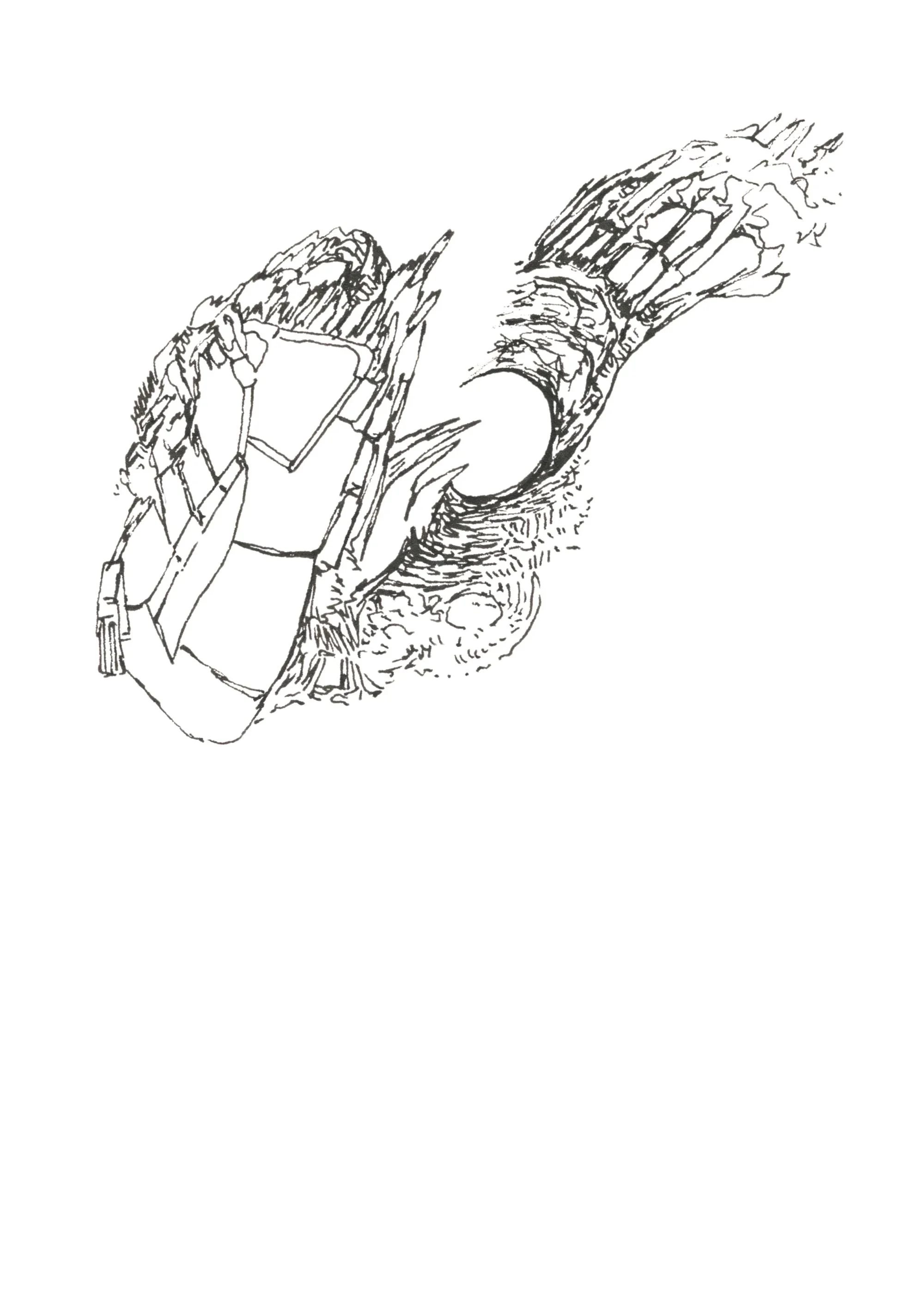
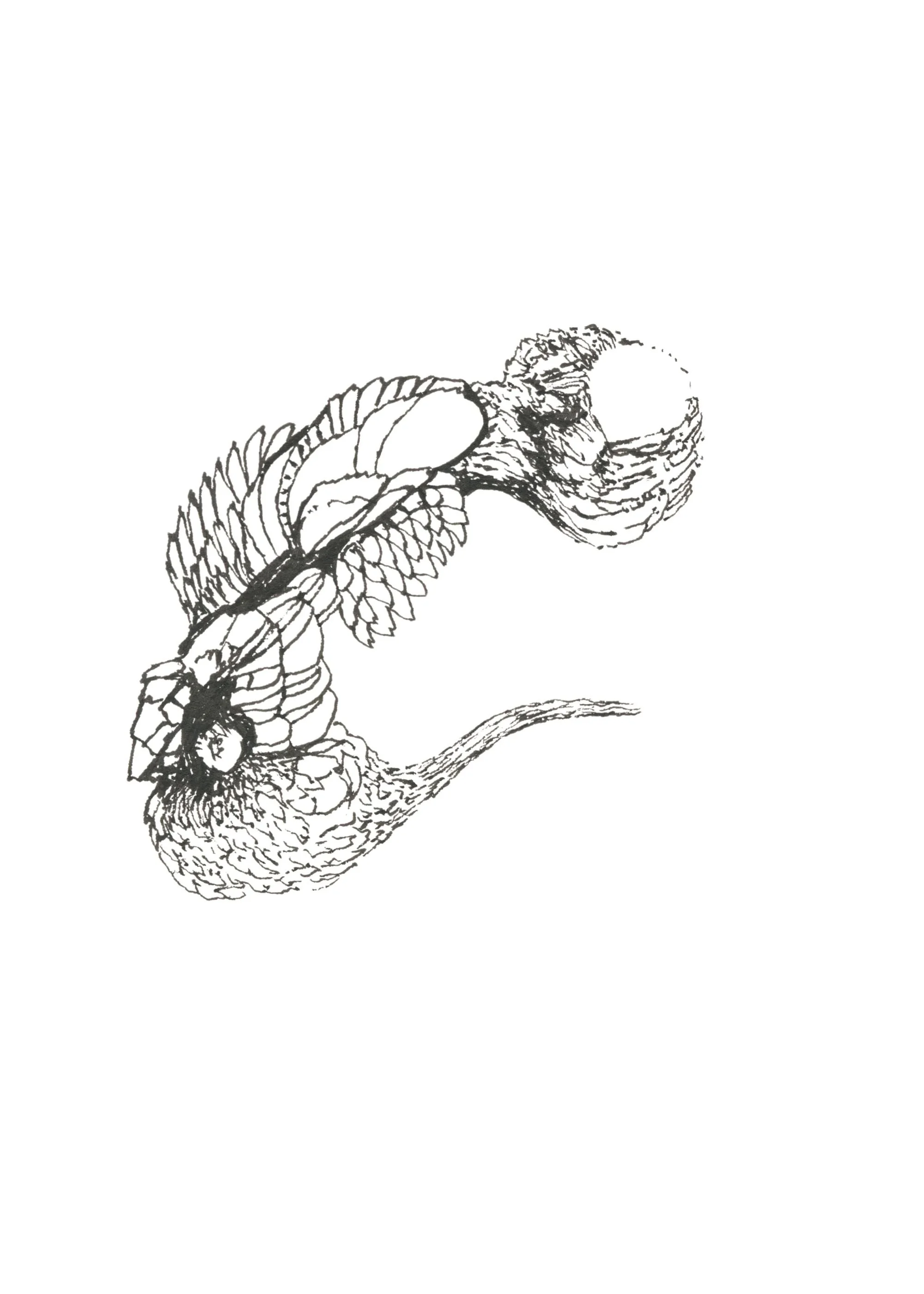
III. Fragments de paysage
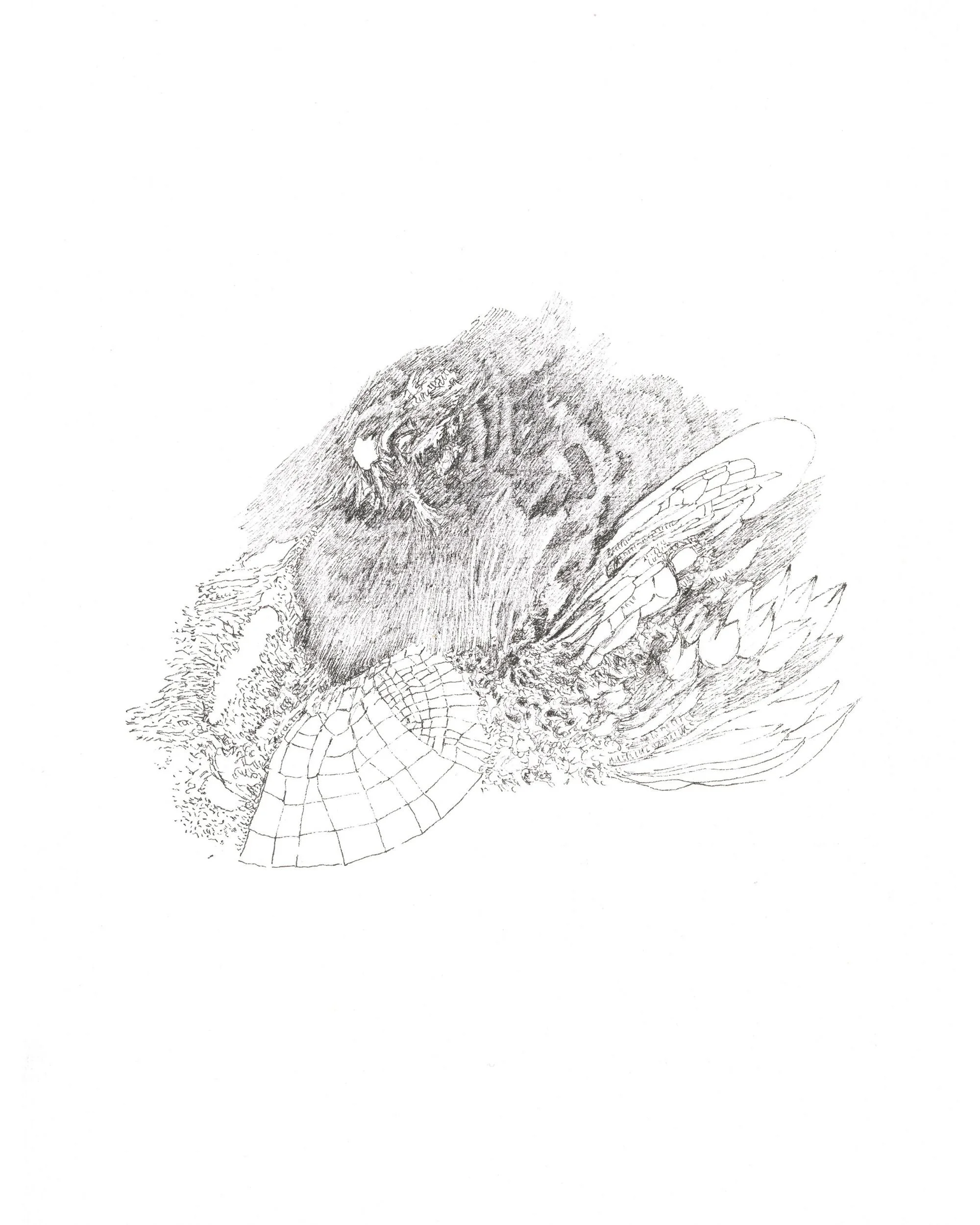
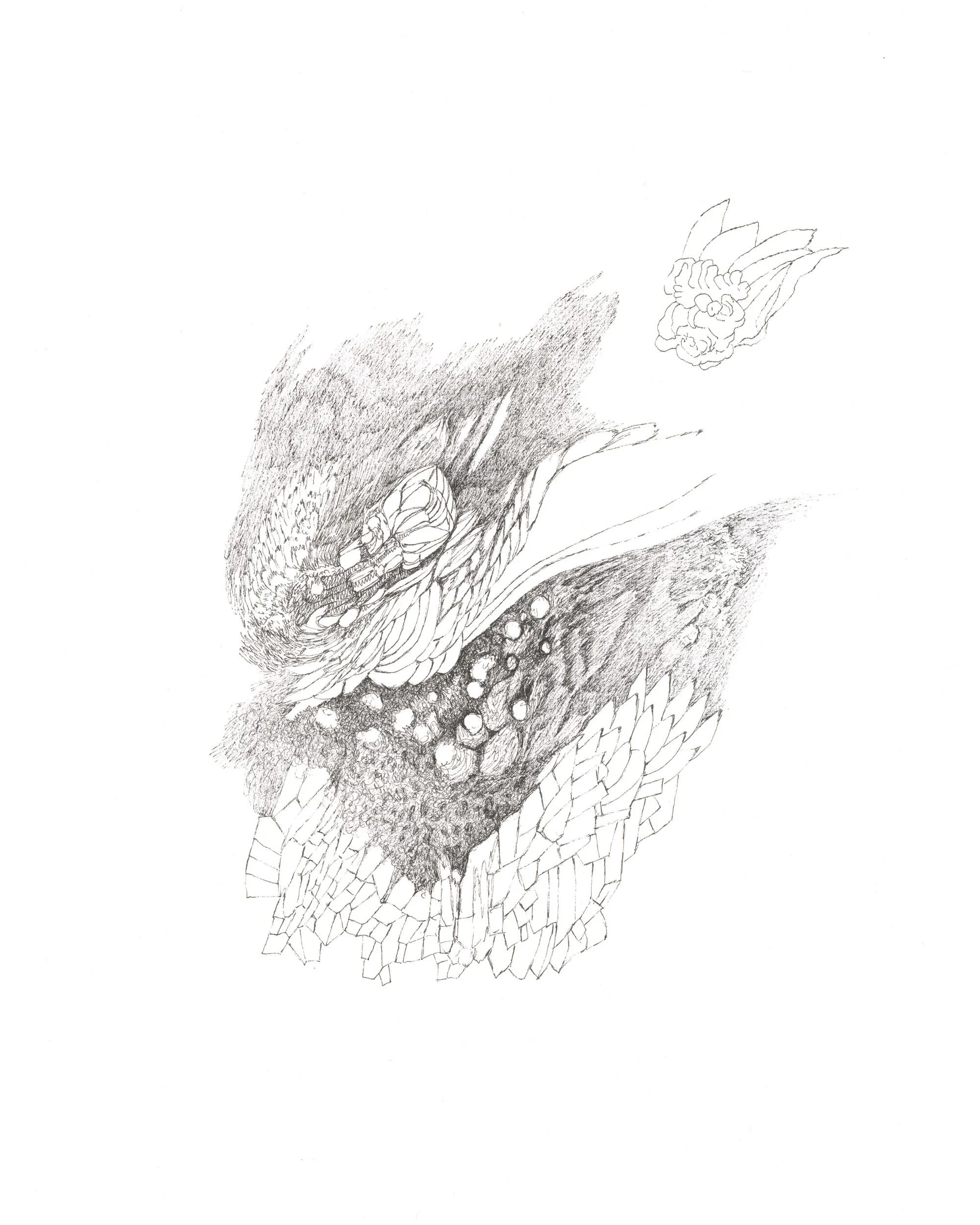
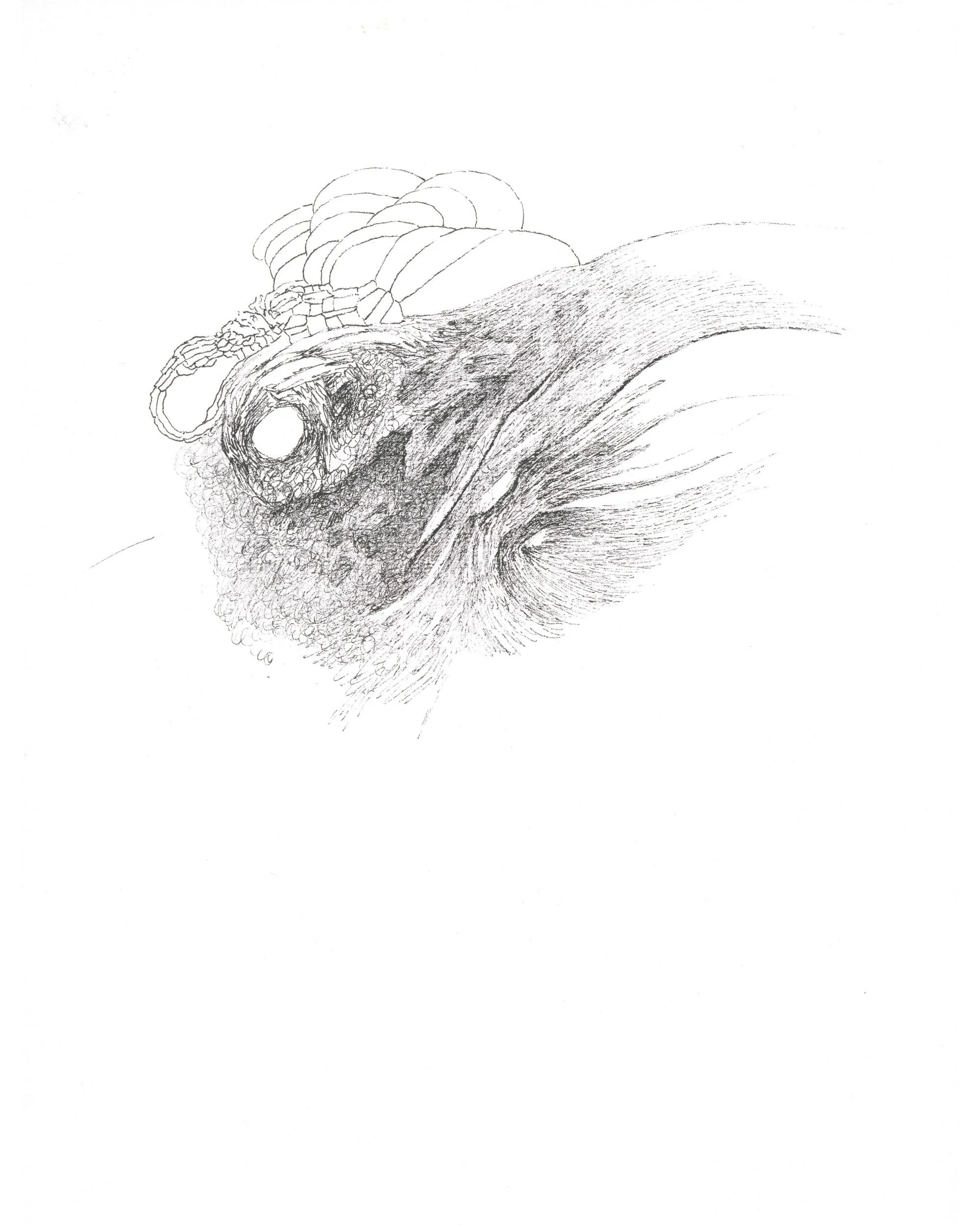
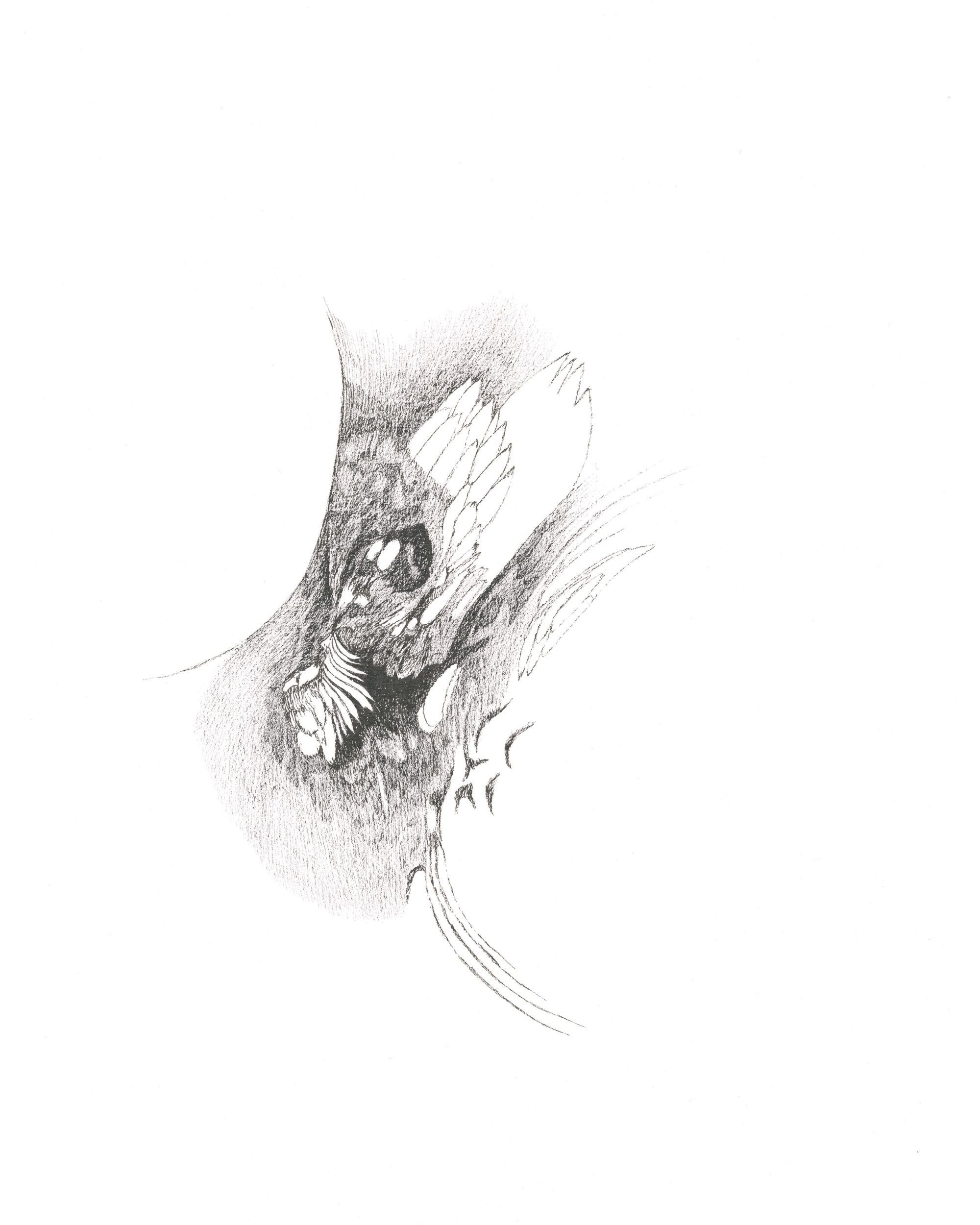
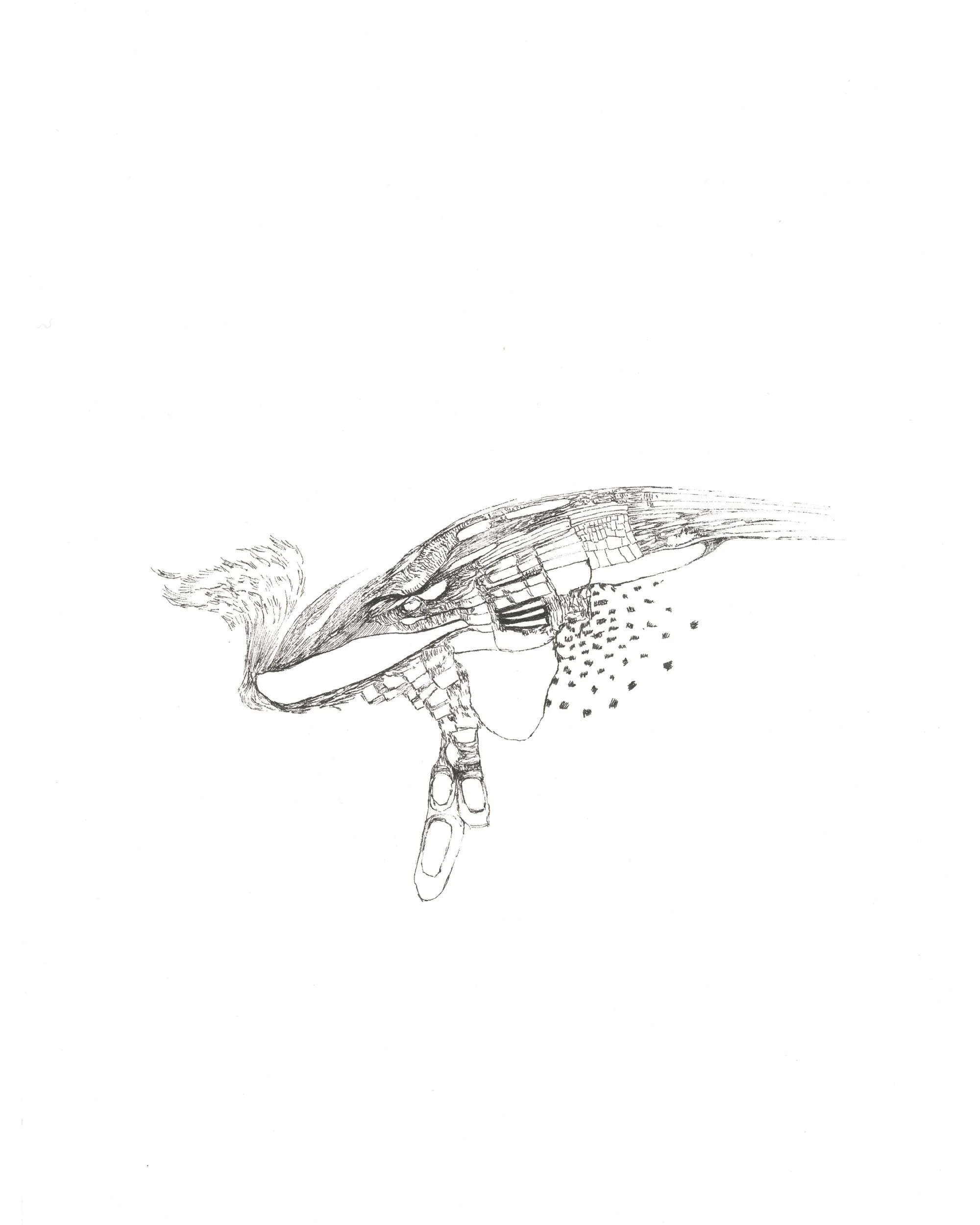
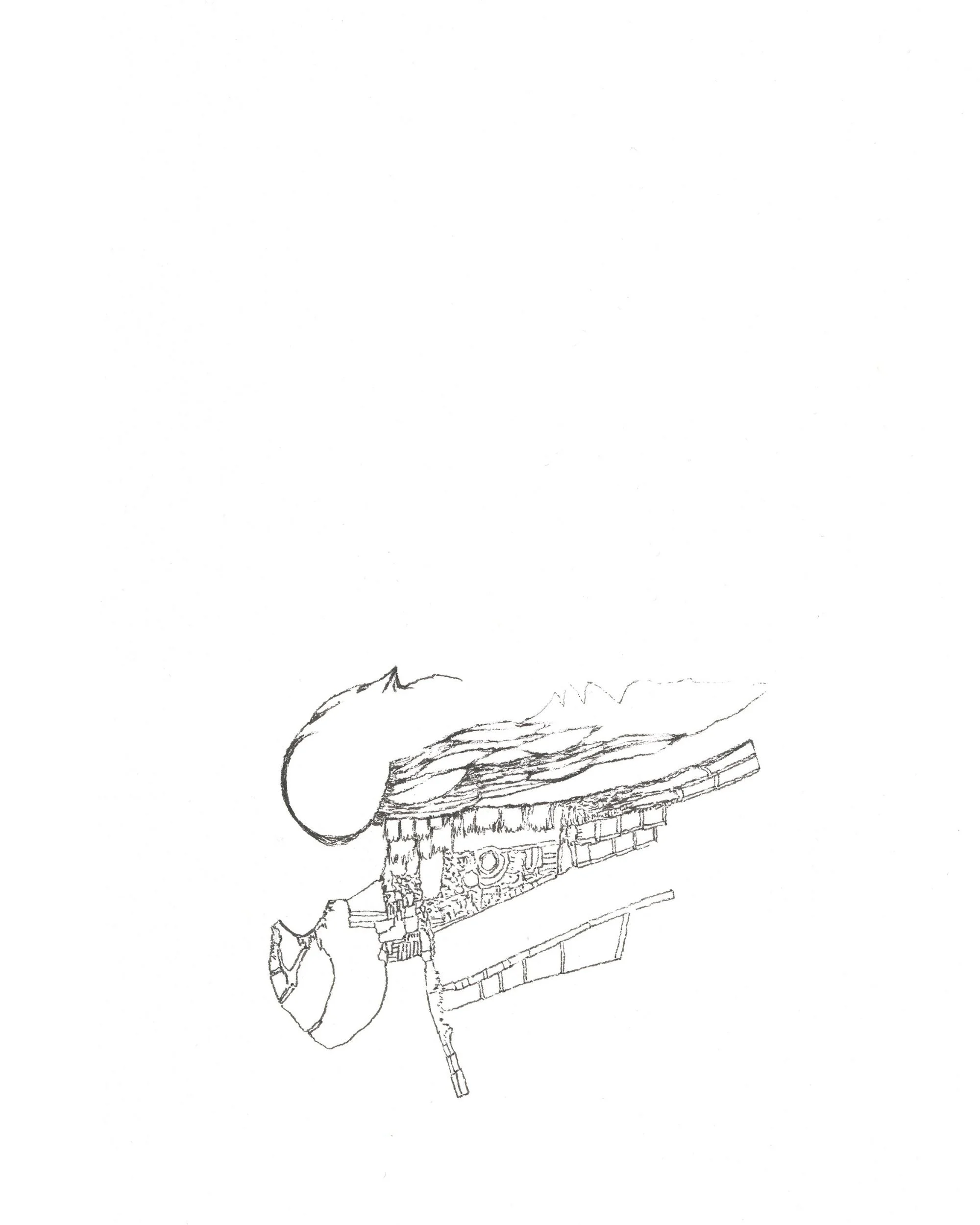
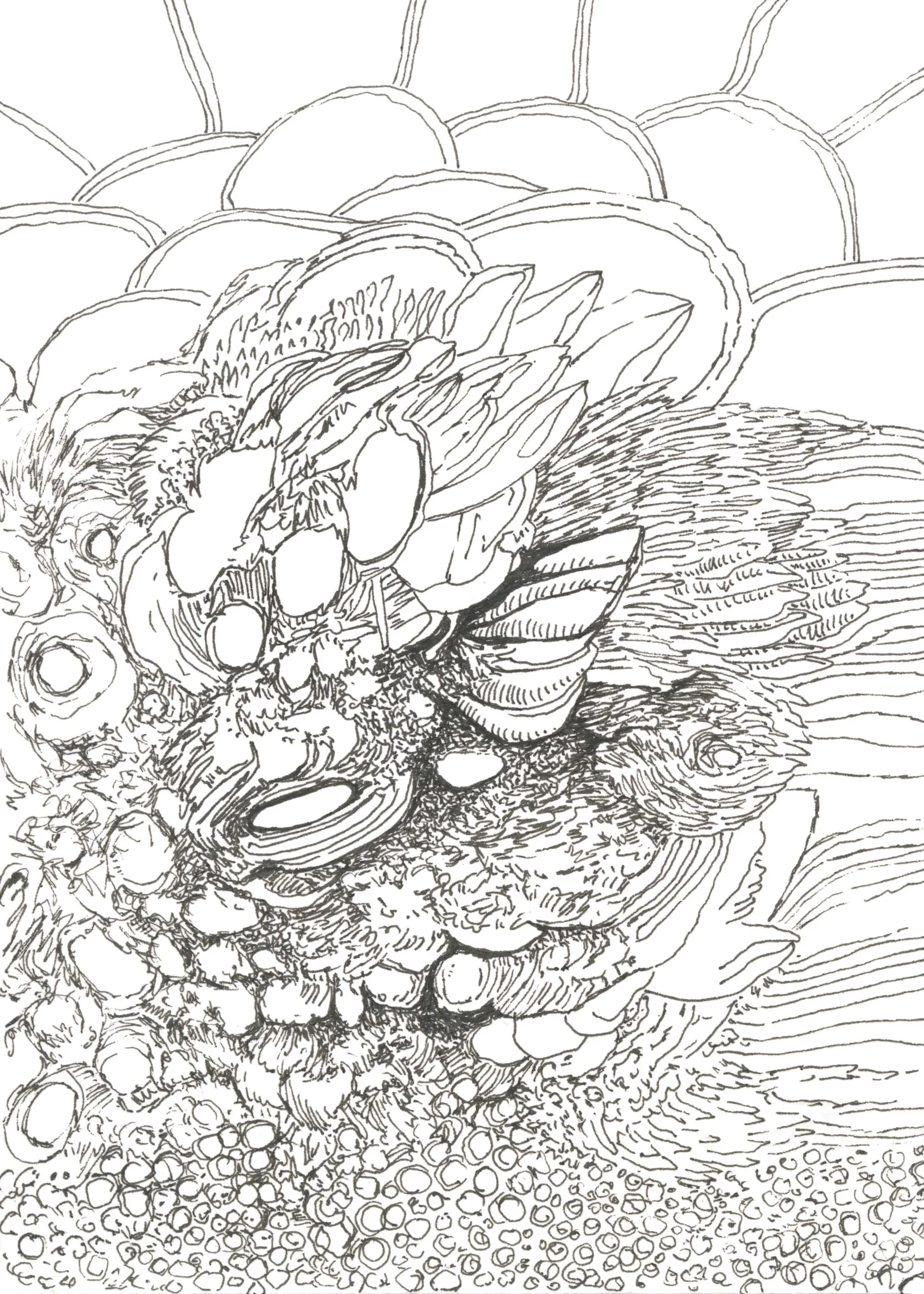
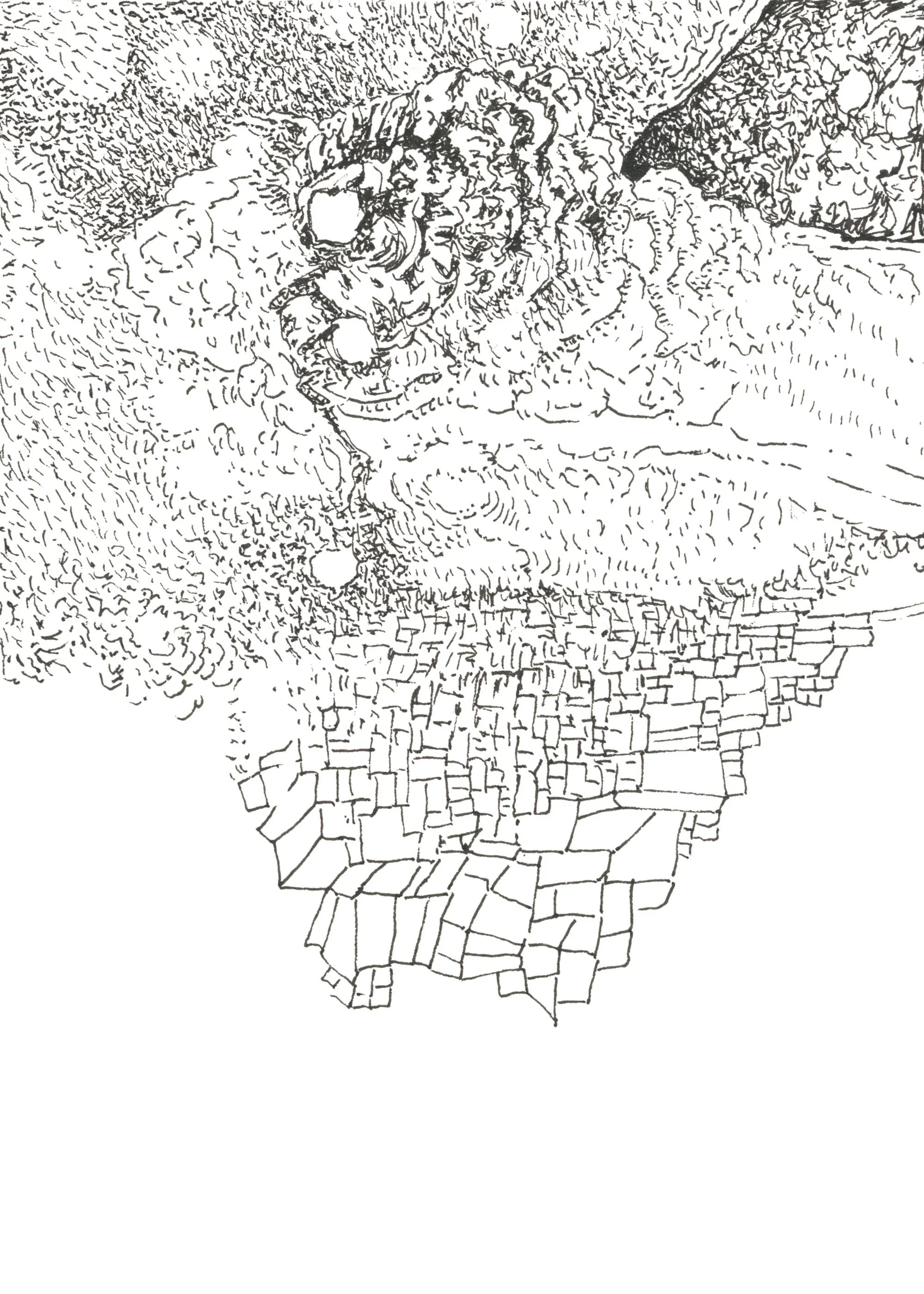
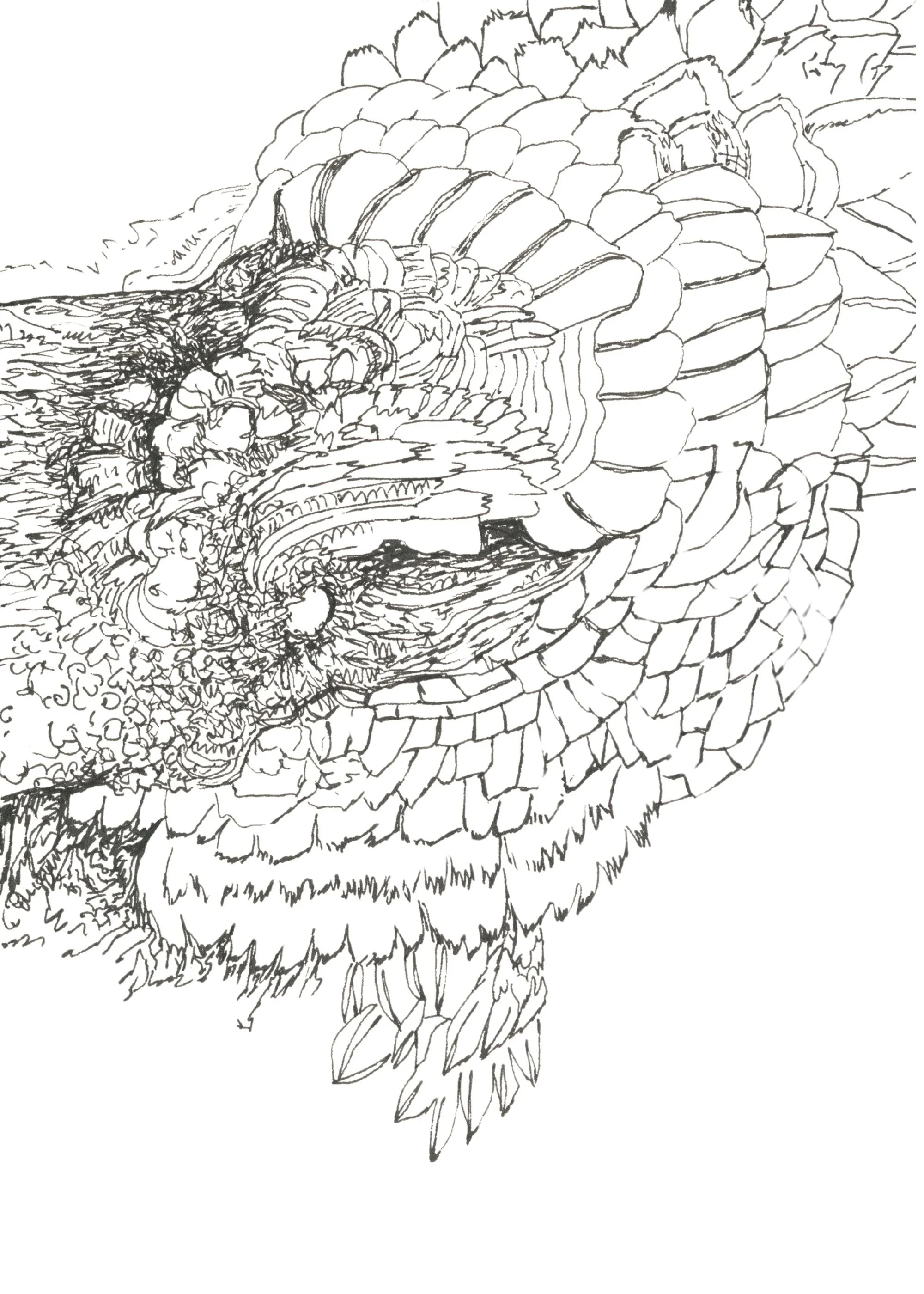
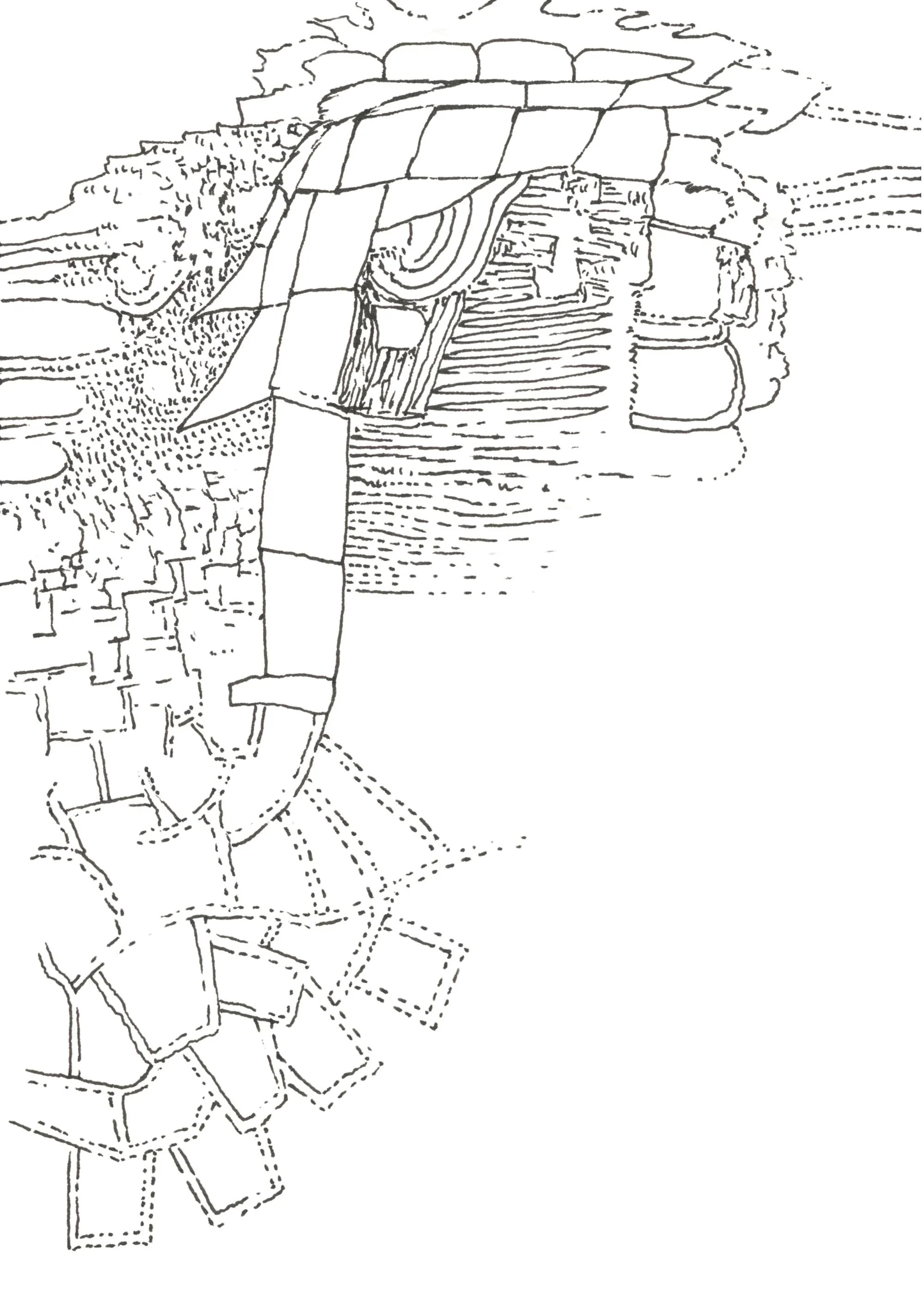
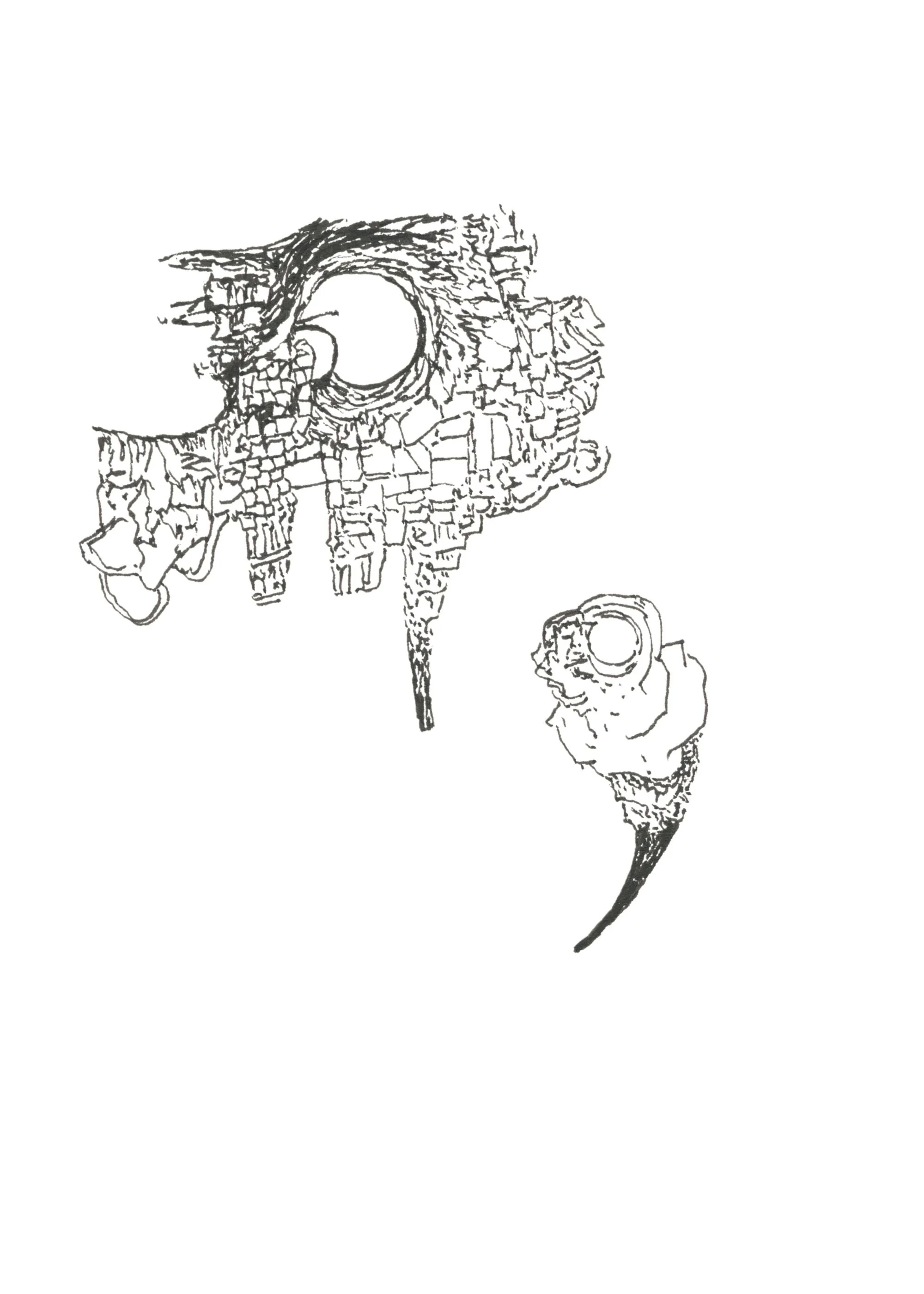
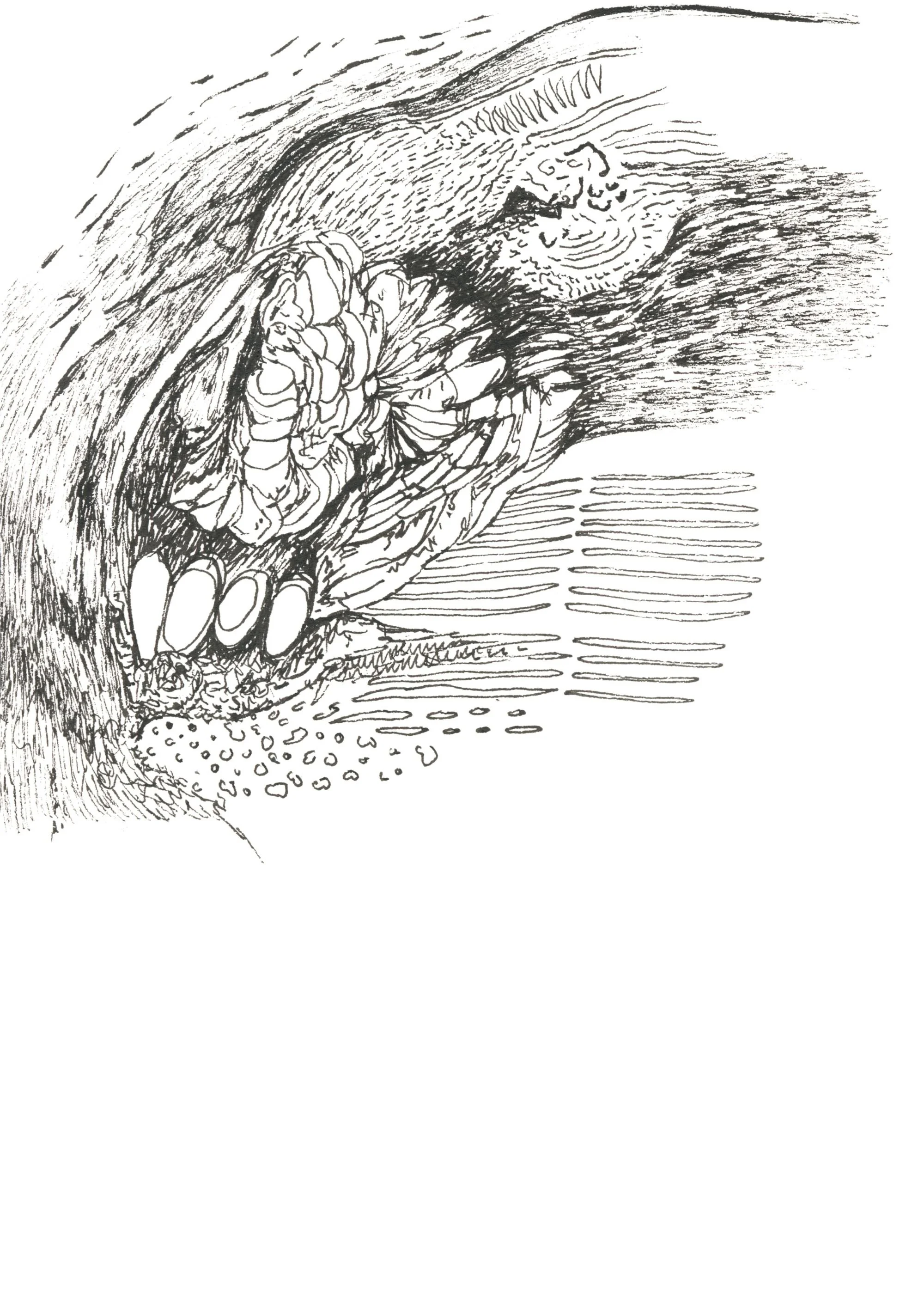
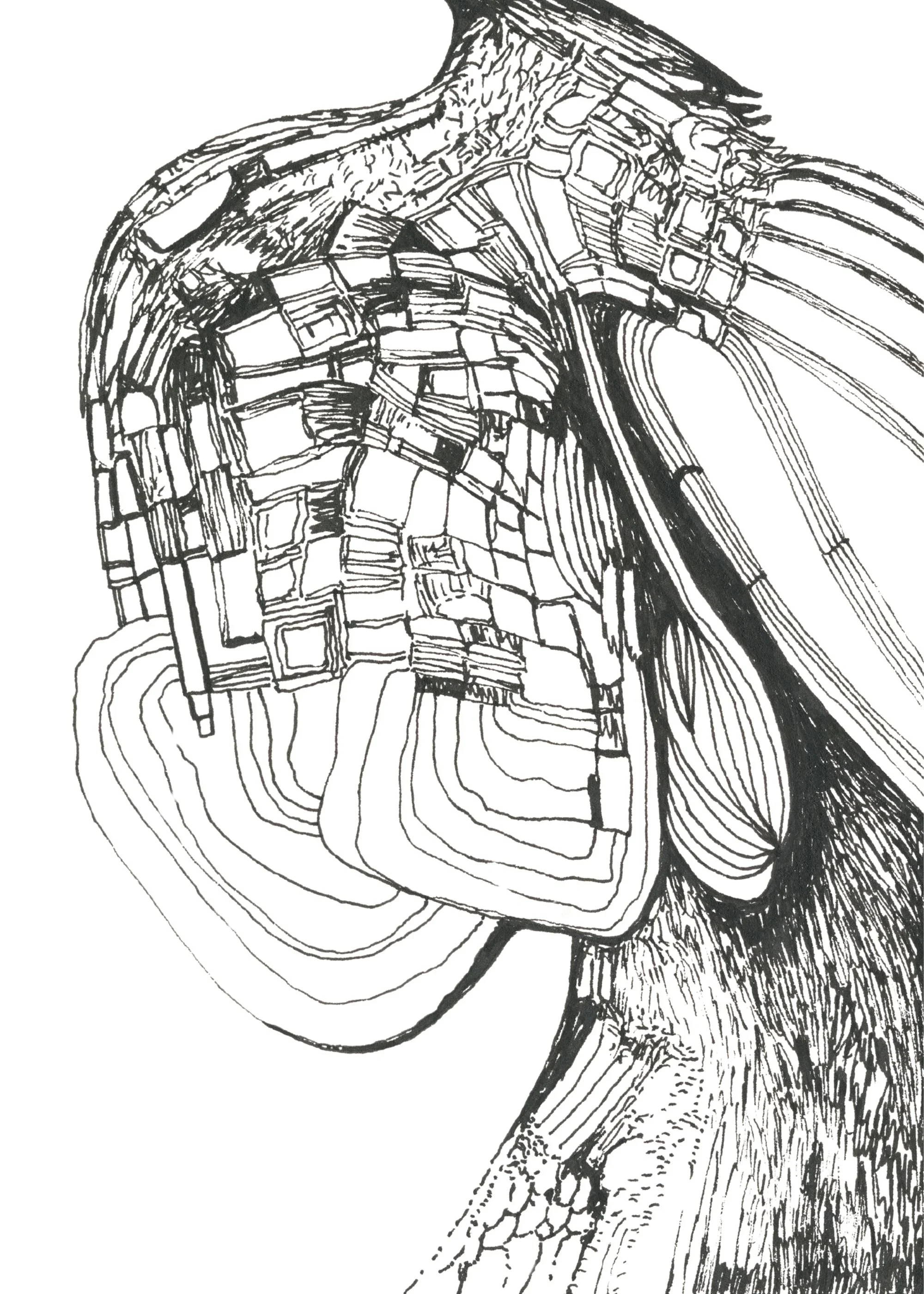
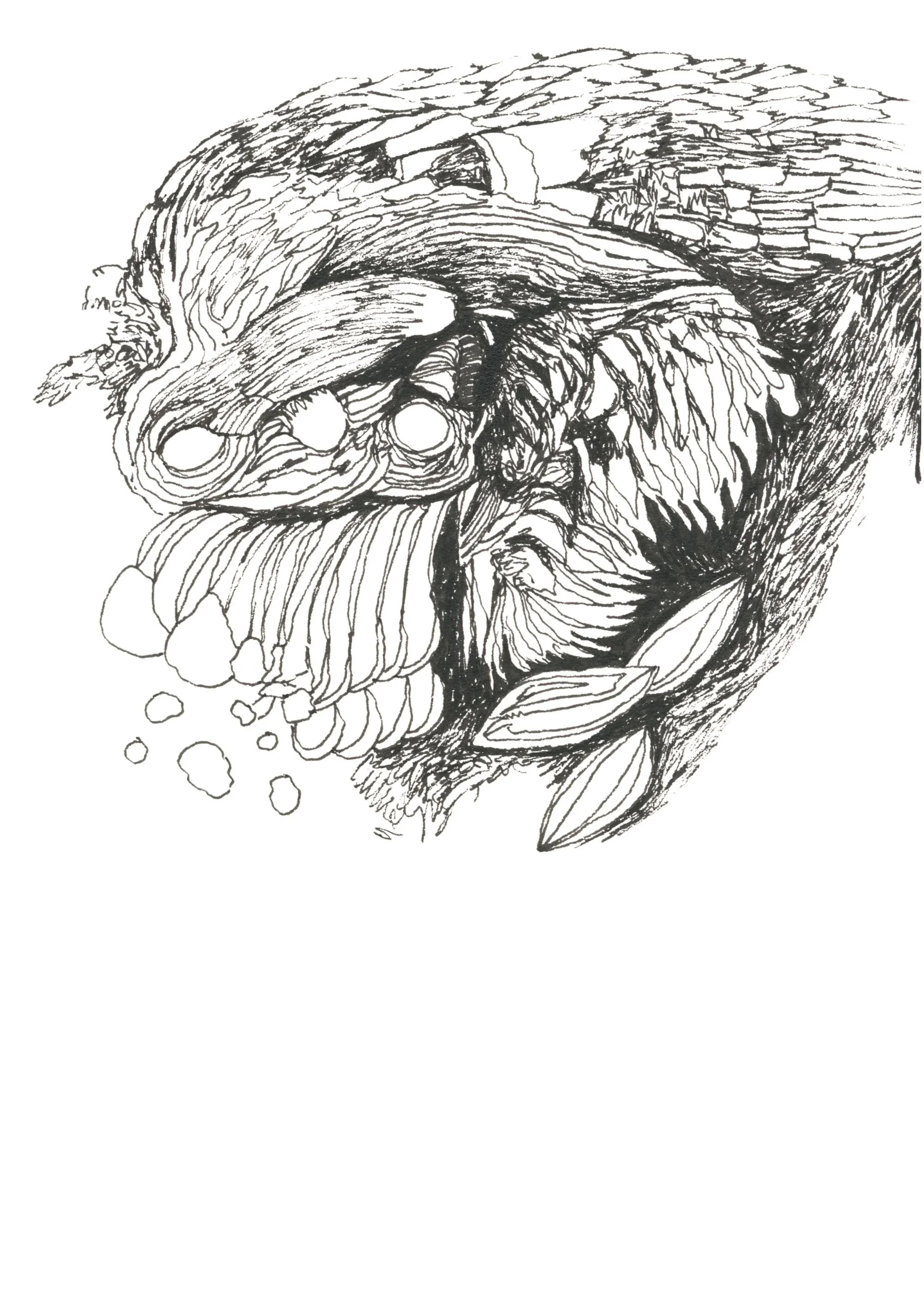
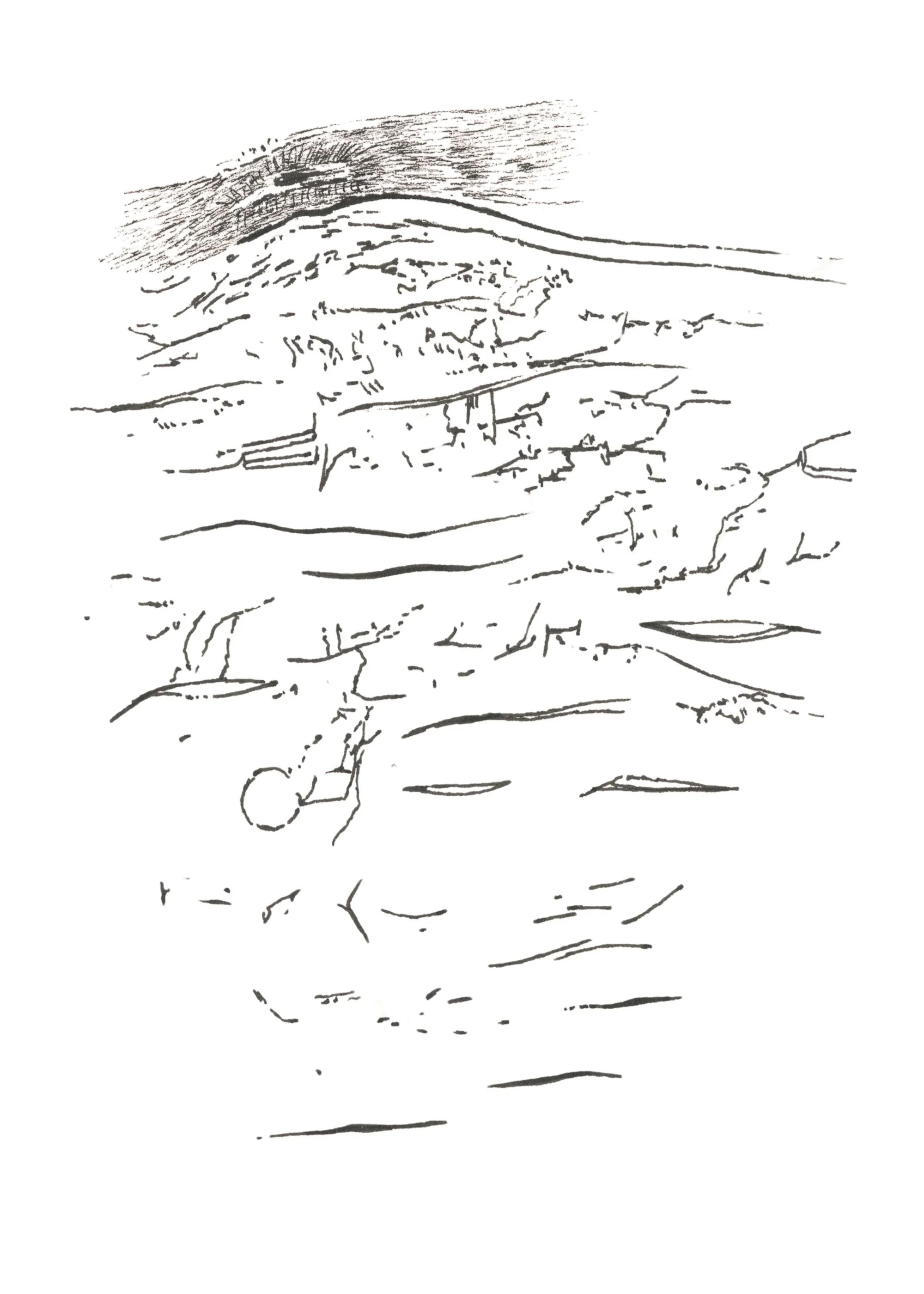
These drawings function as fragments rather than representations.
They do not depict landscape as a visible scene, but isolate its internal structures — pressure, density, rhythm, rupture. Each fragment operates as a partial record, detached from scale and orientation.
The line moves between accumulation and erosion. Forms emerge, interrupt one another, disperse. What appears is neither organic motif nor abstraction, but a residue of perception — a landscape broken into segments that resist closure.
The drawings do not compose a unified image; they remain open. They hold traces of light, tension, and attention without resolving them into a single view. The landscape itself remains static — it is the act of seeing that shifts.
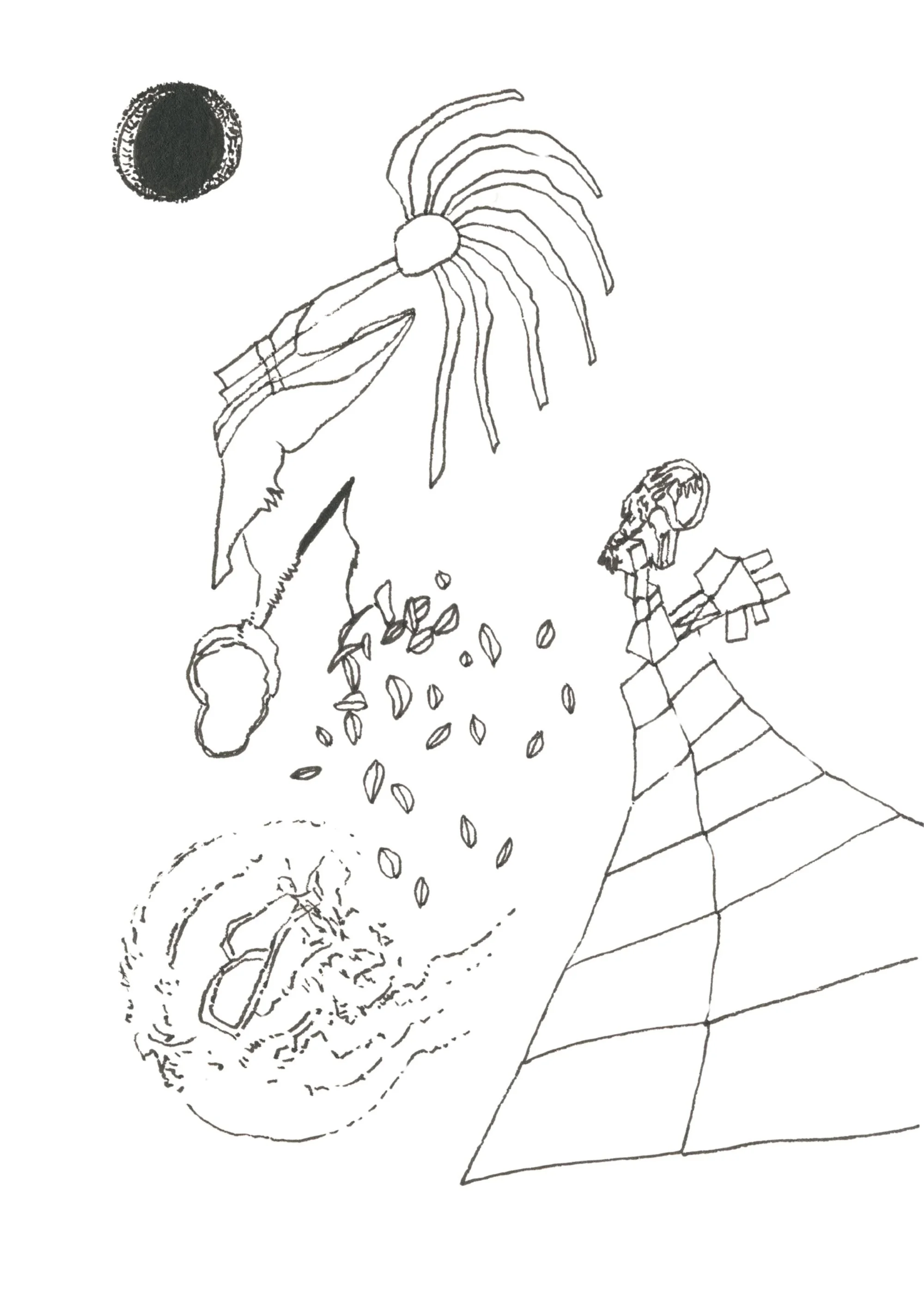
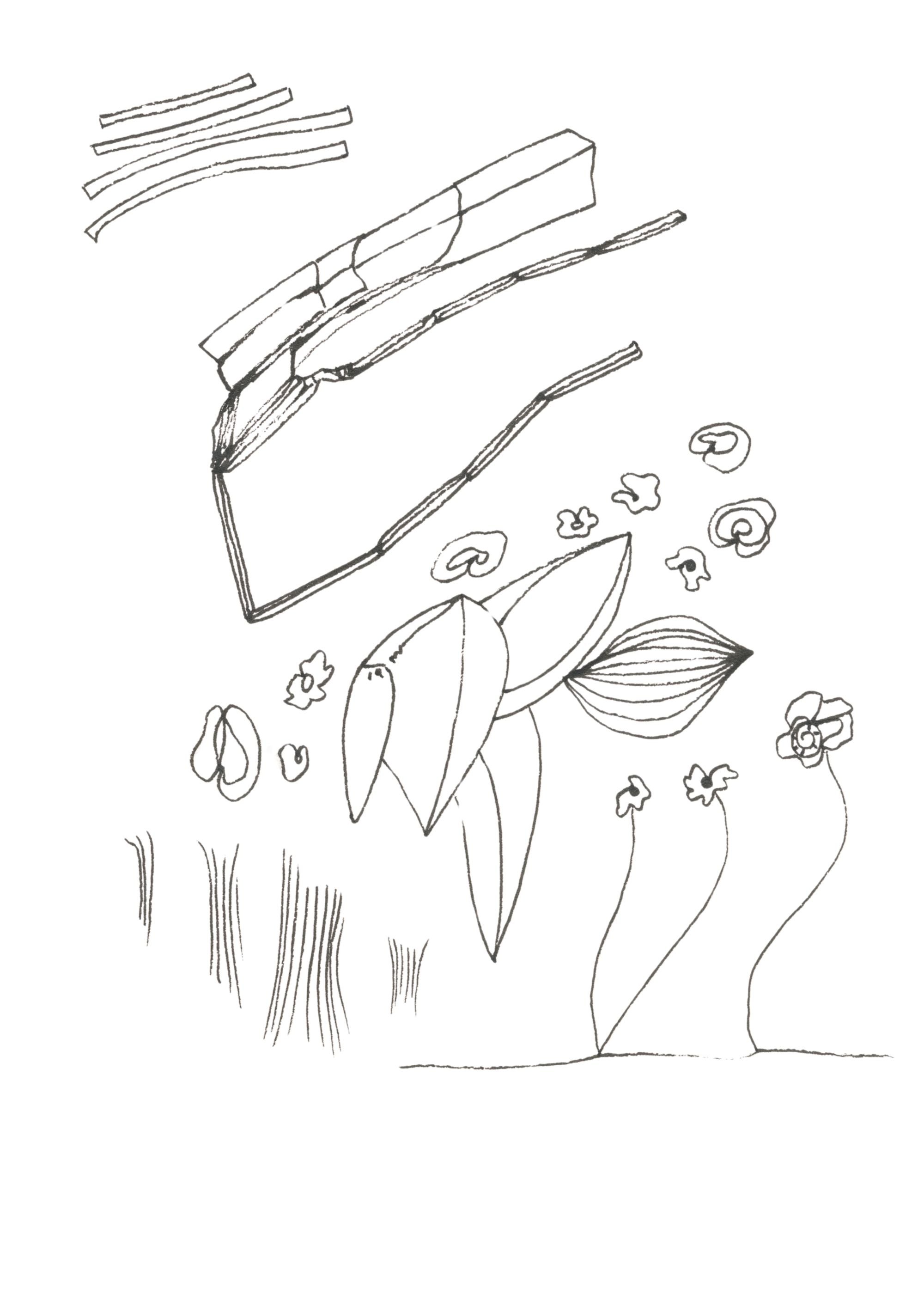
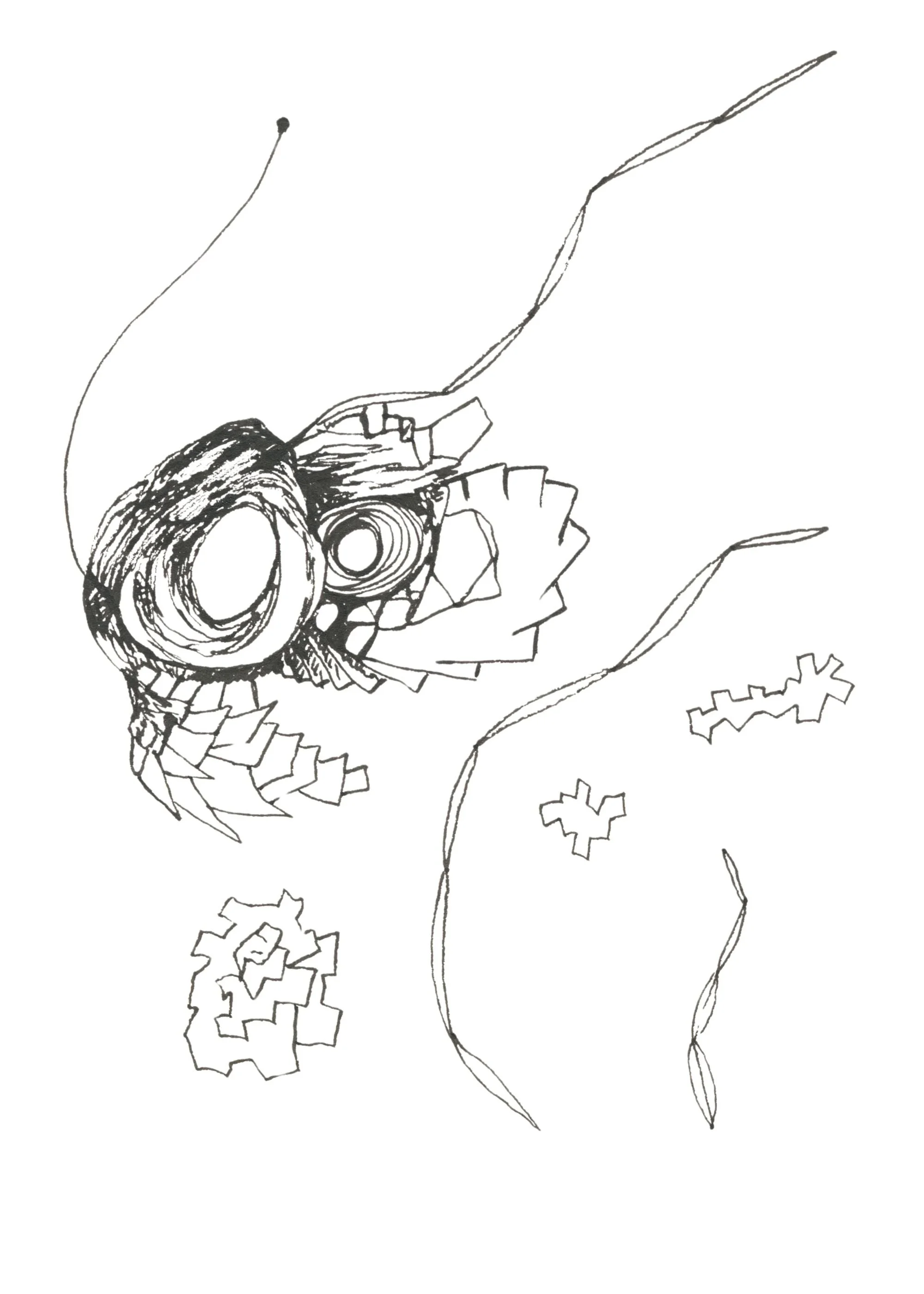
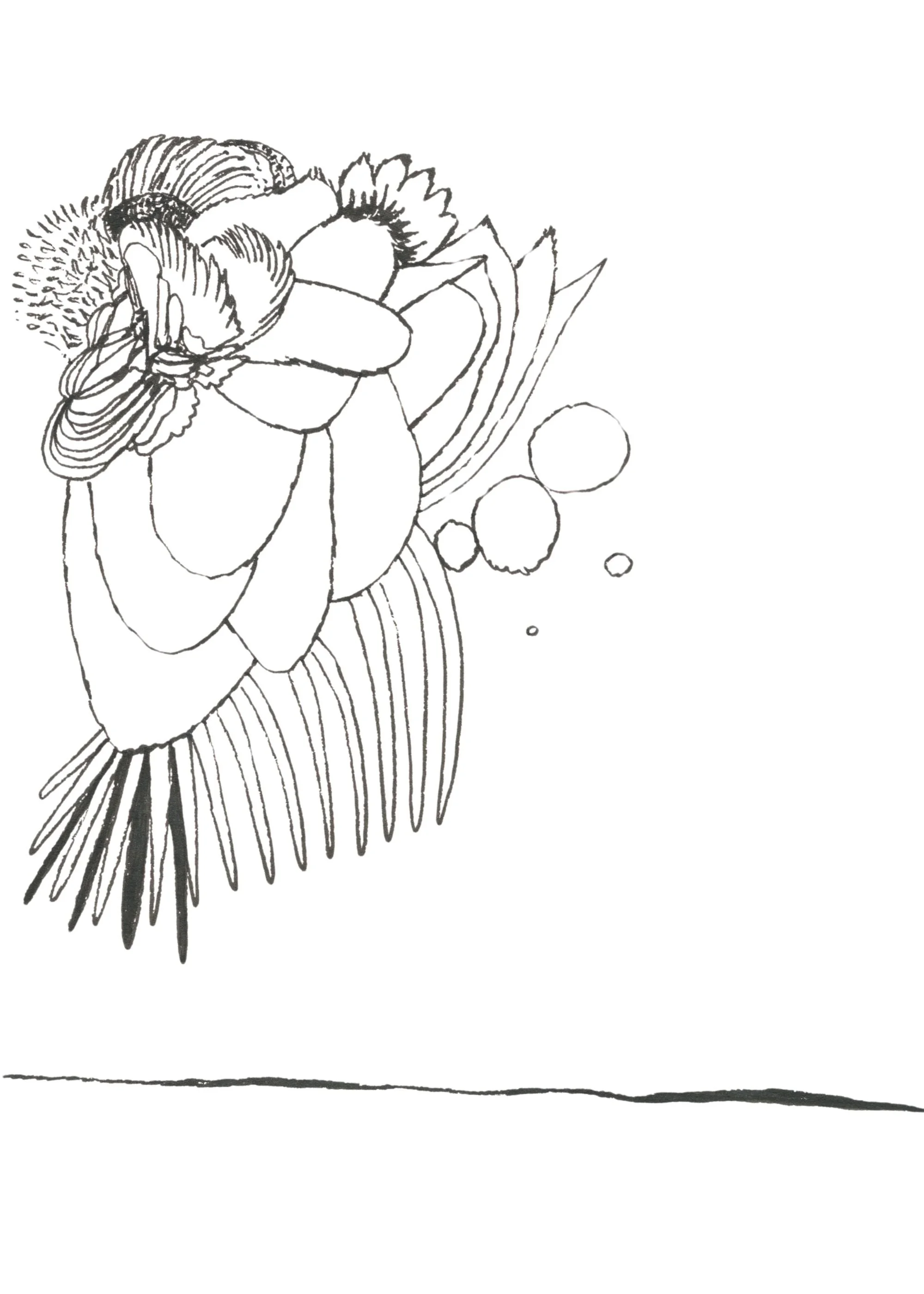
IV. Carnets de route
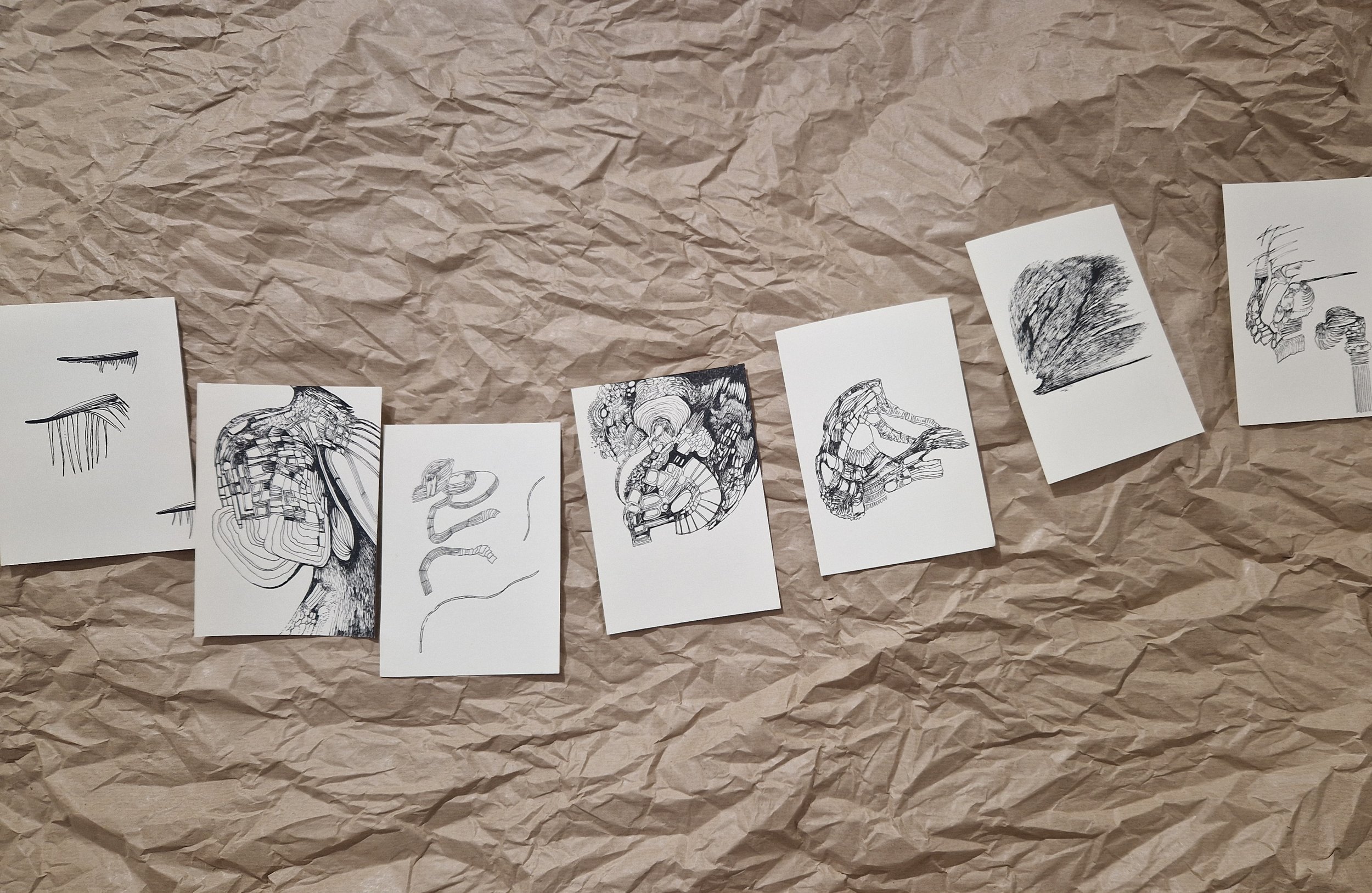
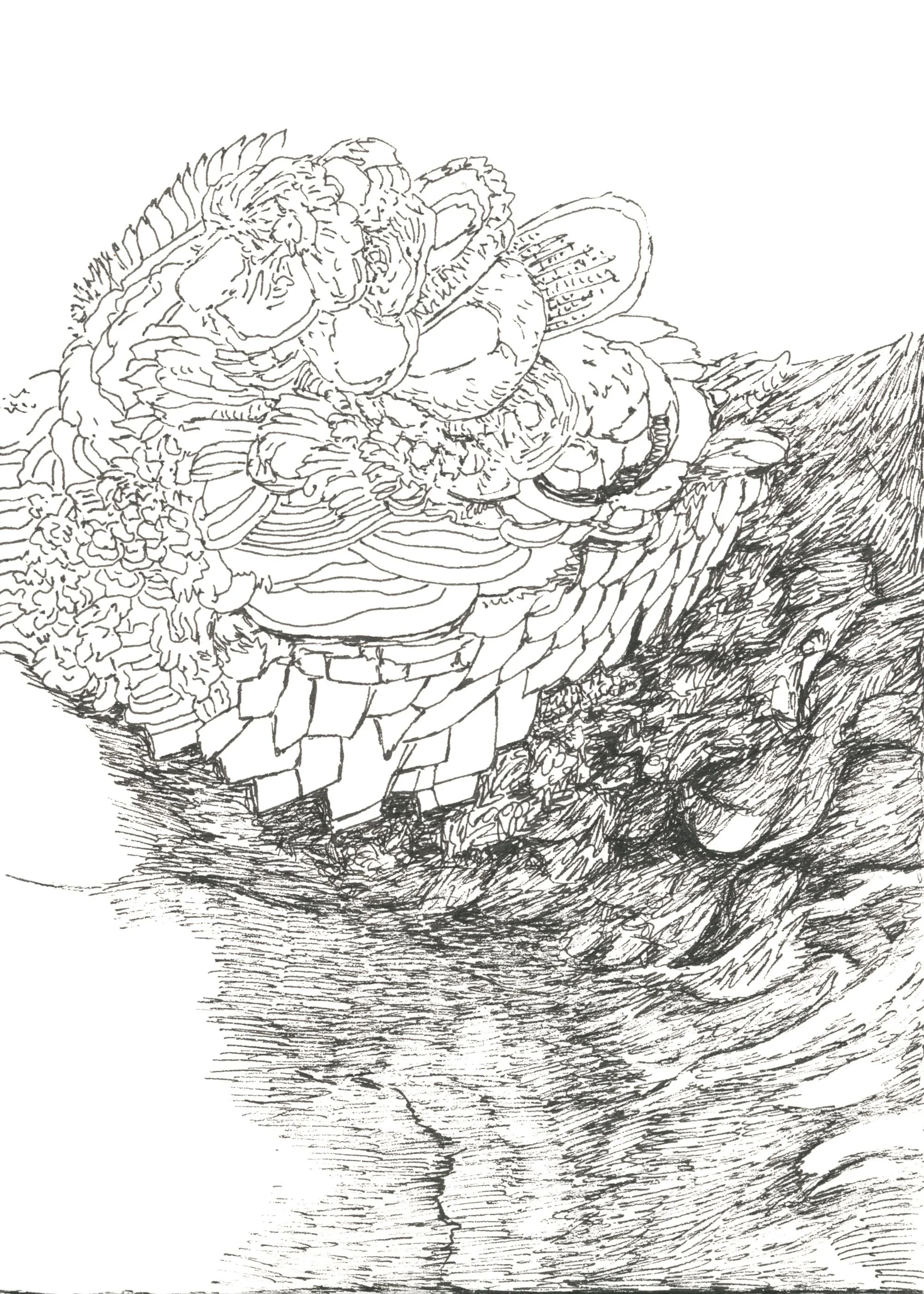
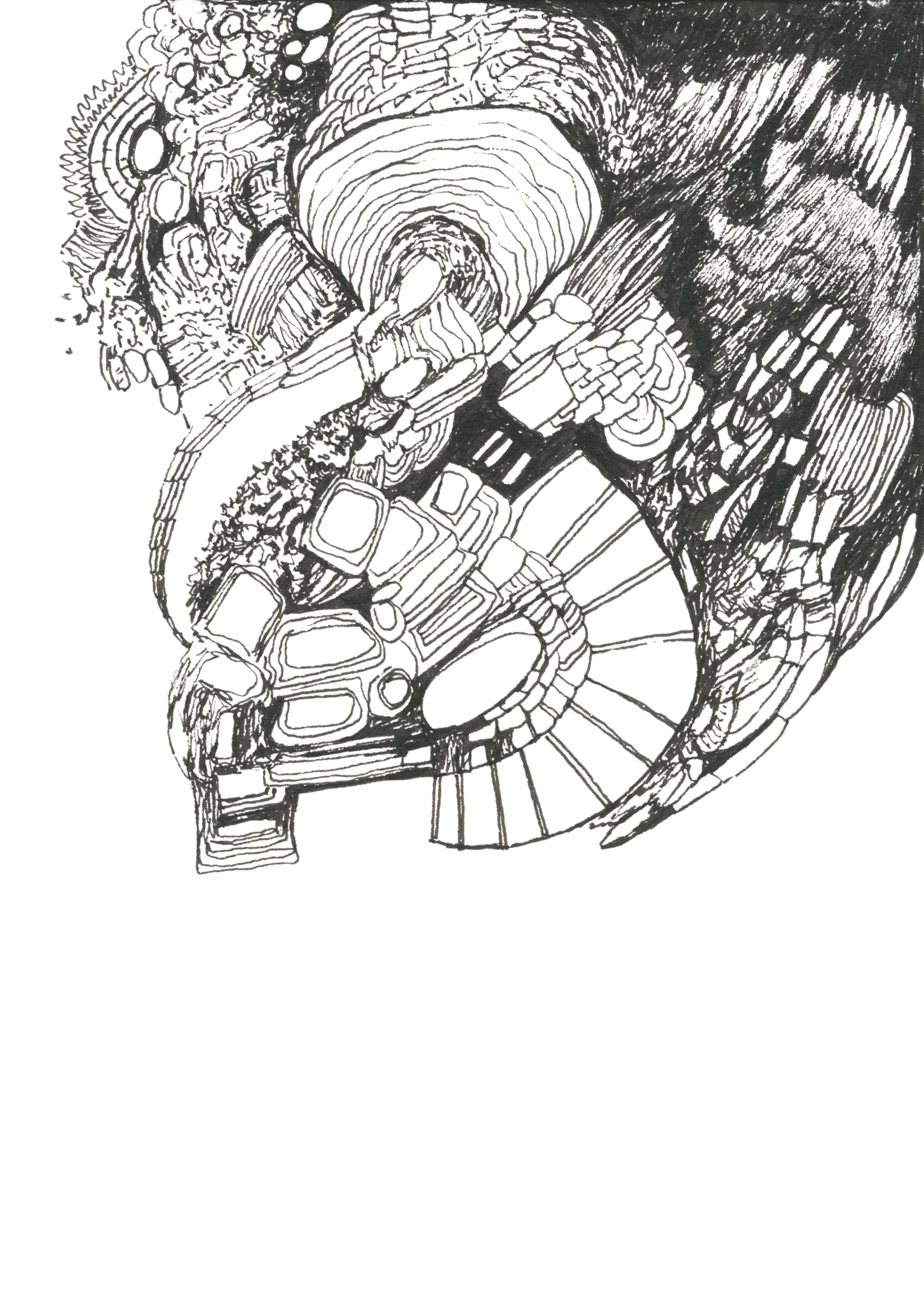
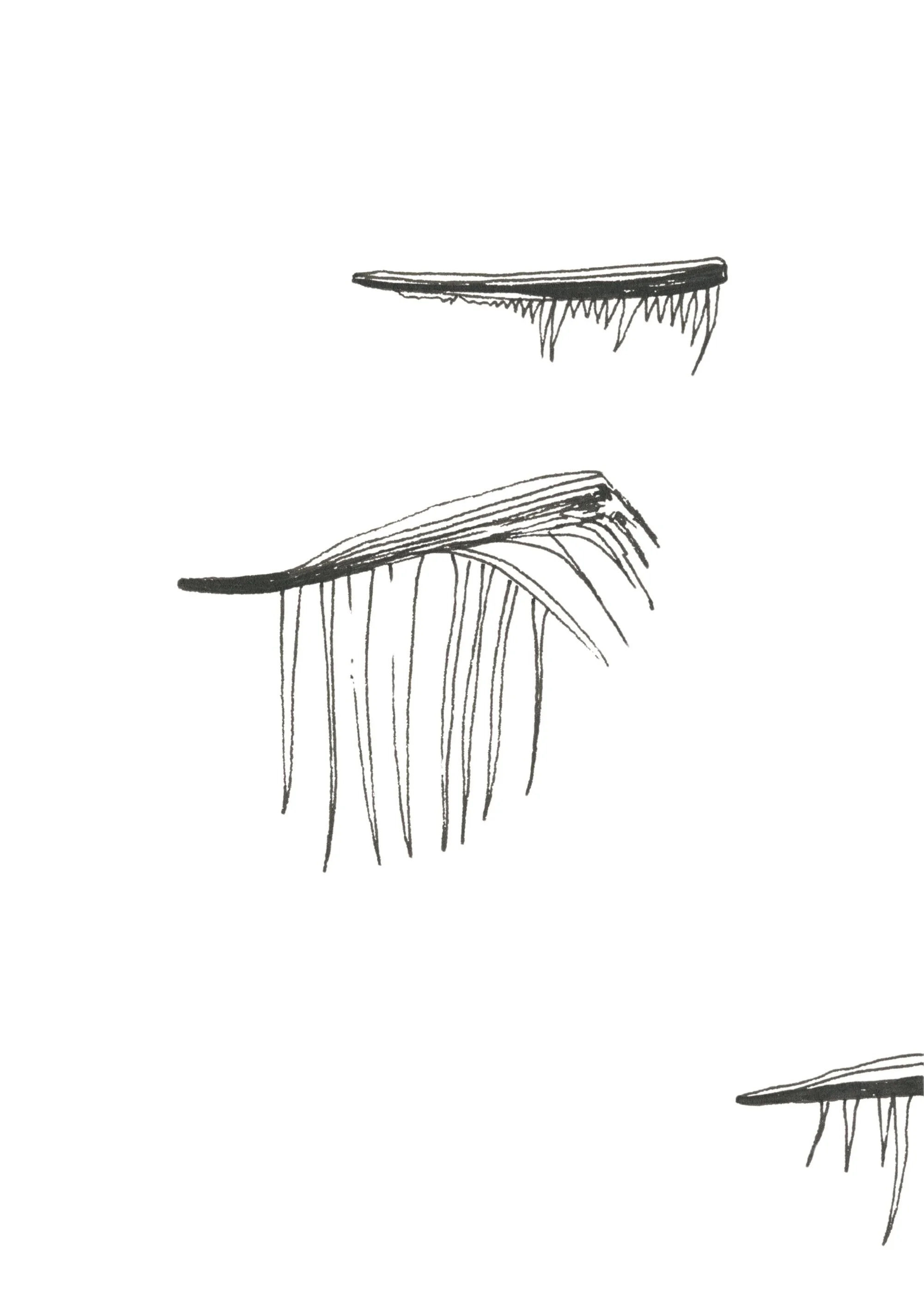
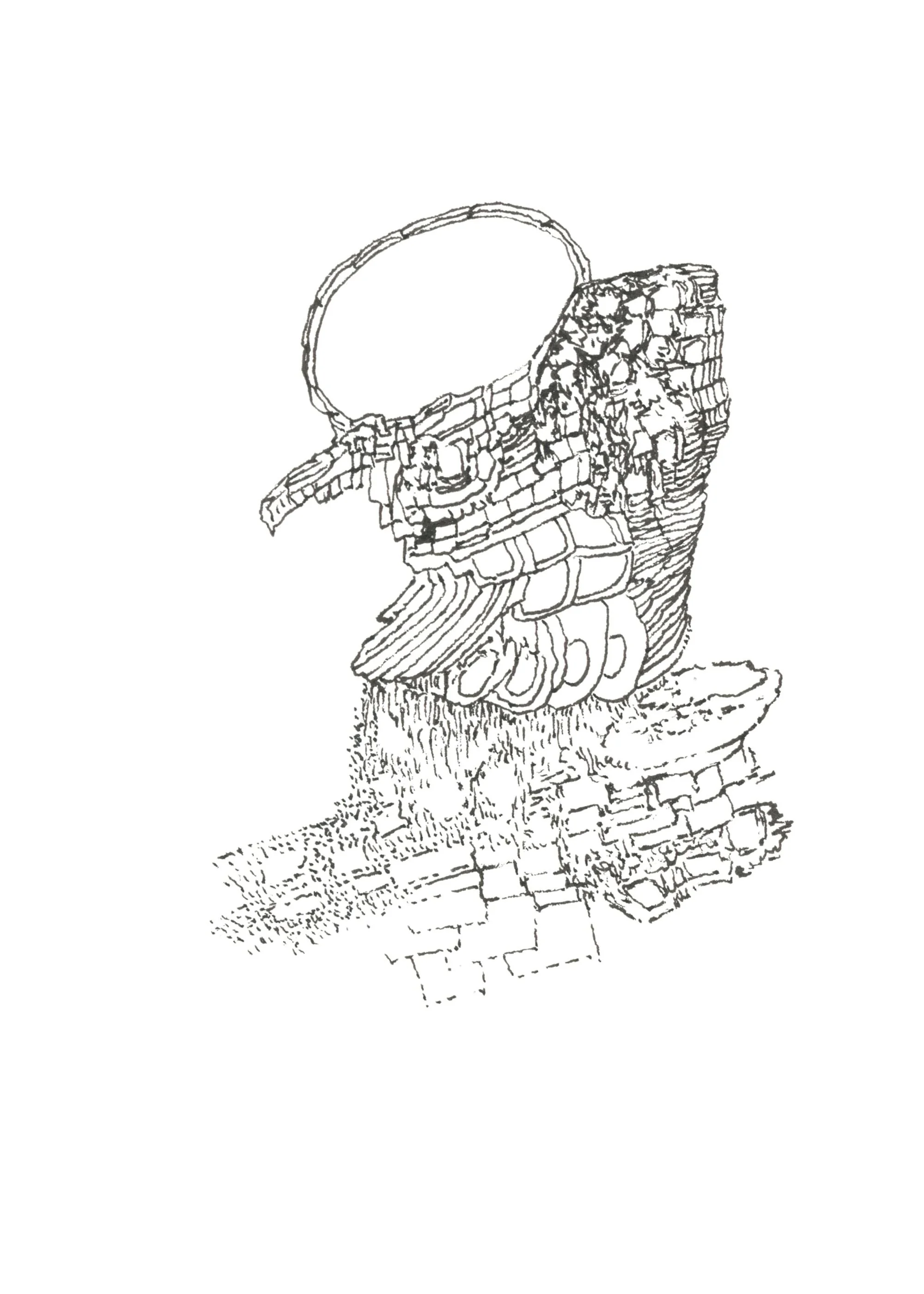
A sequence of drawings emerging directly from the act of looking at the landscape. Lines accumulate, dissolve, repeat. Forms appear dense or fragmentary, sometimes structured, sometimes open, shifting between control and release.
The drawings do not describe a place. They register its surface, rhythm, and internal tension. What remains is not an image of landscape, but its imprint — translated through line, scale, and gesture.
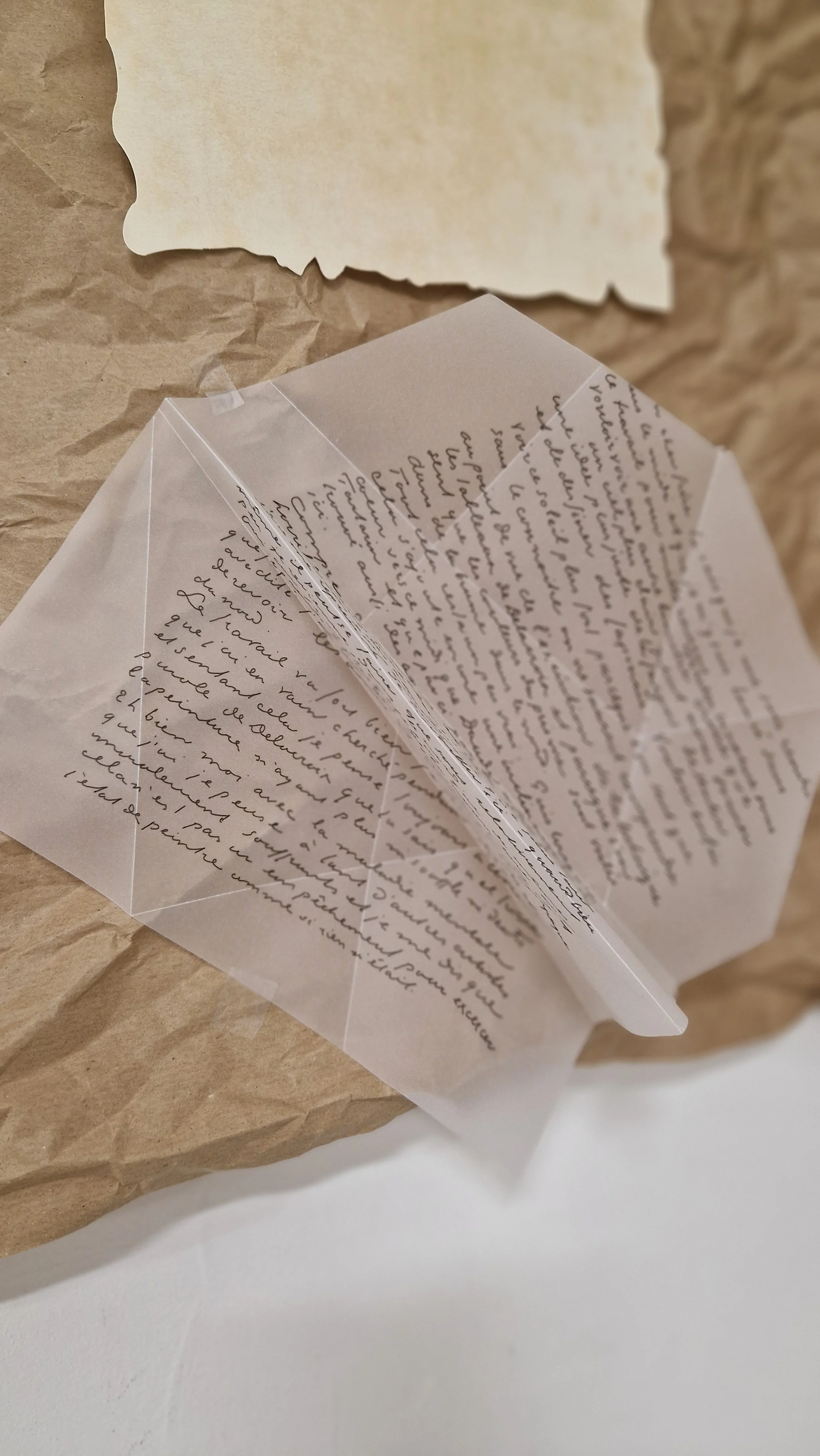
V. Lettres à Van Gogh
This series takes the form of letters addressed to Vincent van Gogh.
Not as correspondence in the literal sense, but as a gesture — an attempt to speak across time through fragments rather than narration.
Each envelope contains dispersed elements: handwritten notes, drawings, excerpts of song lyrics, partial thoughts. Instead of continuous description, the letters assemble a world through discontinuity.
In contrast to van Gogh’s letters — precise, extensive, and deeply descriptive — these letters reflect a contemporary condition of fragmented communication.
The letters do not aim to define the self. They leave it unresolved — composed of traces, interruptions, and pauses.